













Charles Dickens Plotted to Send His Sane Wife to an Asylum

Being married to the Victorian author Charles Dickens was definitely not the best of times.
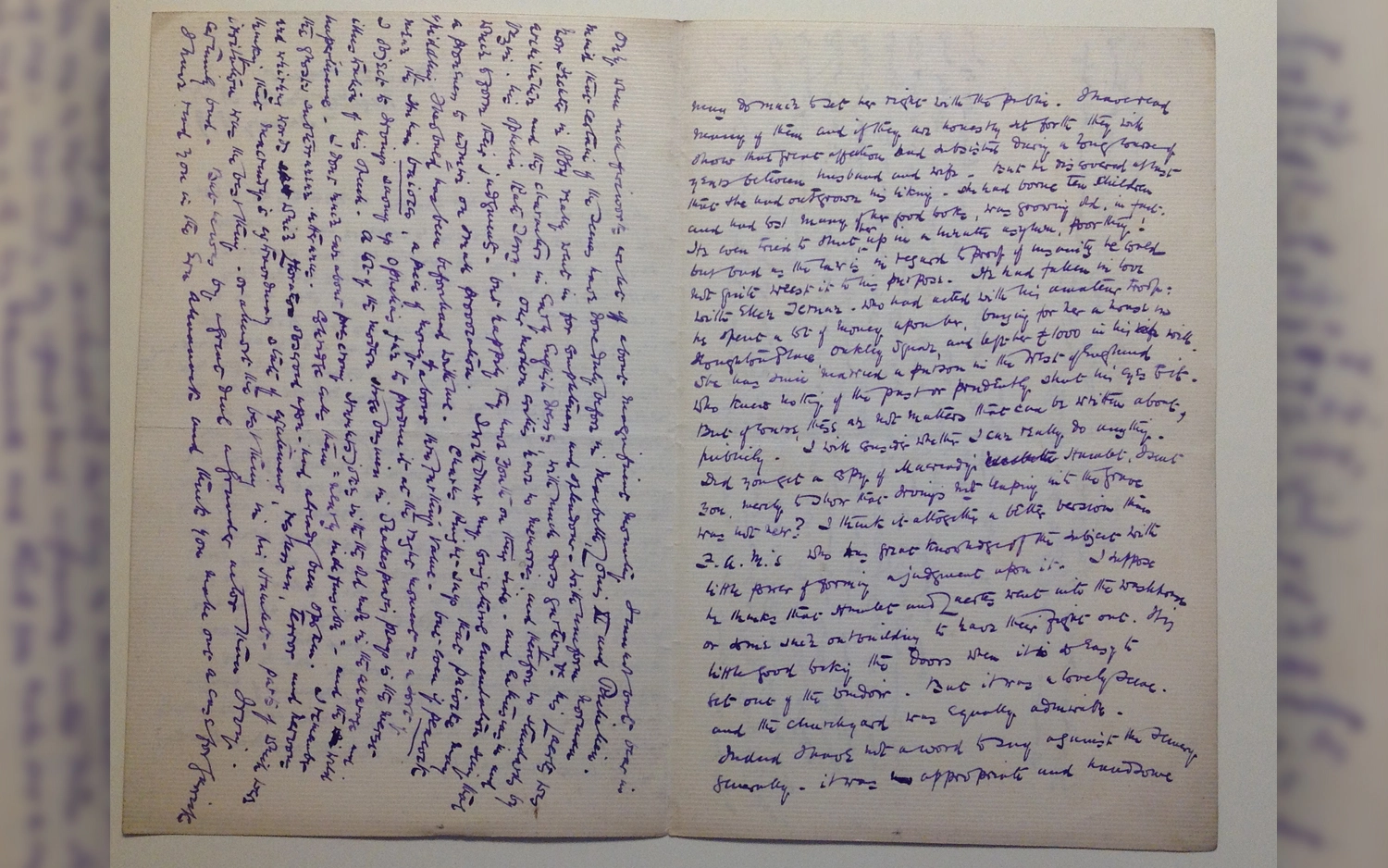
Long-hidden letters reveal that Dickens sought to have his wife, Catherine, forcibly consigned to an institution — a scheme that fell apart when doctors found no evidence of mental illness in the woman.
At first, the two were happily married (and raised 10 children together). But by the time Charles and Catherine separated in 1858, their relationship was in tatters. John Bowen, a professor of 19th-century literature at the University of York in the United Kingdom, recently uncovered the sordid tale in 98 letters that were kept at Harvard University but never transcribed or analyzed. When Bowen did so, "it was a moment that made the hairs on the back of my neck stand up," he said in a statement. [5 Ways Relationships Are Bad for Your Health]
The letters were penned by Edward Dutton Cook, a journalist and neighbor of Catherine's following her separation from Charles. Cook addressed them to his friend William Moy Thomas.
"Poor thing"
The conversations between Cook and Catherine took place nearly 20 years after Catherine and Charles separated, and what she revealed was chilling. After 22 years of marriage, Charles began an affair with a young actress and decided that he was tired of his wife, who had given birth to 10 children "and had lost many of her good looks," Cook wrote in 1879.
"He even tried to shut her up in a lunatic asylum, poor thing!" Cook recounted in the same letter. "But bad as the law is in regard to proof of insanity, he could not quite wrest it to his purpose," Cook wrote.
Scholars have long known that Charles Dickens behaved poorly toward his wife, but the details in Cook's letter are especially damning, Bowen said.
Get the world’s most fascinating discoveries delivered straight to your inbox.
This discovery could also explain Charles Dickens' mysterious falling-out with Dr. Thomas Harrington Tuke, which occurred around the same time that the author's marriage ended, Bowen said in the statement.
Tuke served as superintendent of Manor House Asylum in Chiswick between 1849 and 1888; it's possible that Tuke refused to go along with Charles' plan to falsely commit Catherine, leading the novelist to later refer to Tuke in letters as a "medical donkey" and a "wretched being," Bowen said.
As for Catherine, it was undoubtedly a far, far better thing to be free of her scheming husband in the end.
- 13 Facts on the History of Marriage
- 8 Tips for Dealing with a Depressed Spouse
- 6 Scientific Tips for a Happy Marriage
Originally published on Live Science.

Mindy Weisberger is a science journalist and author of "Rise of the Zombie Bugs: The Surprising Science of Parasitic Mind-Control" (Hopkins Press). She formerly edited for Scholastic and was a channel editor and senior writer for Live Science. She has reported on general science, covering climate change, paleontology, biology and space. Mindy studied film at Columbia University; prior to LS, she produced, wrote and directed media for the American Museum of Natural History in NYC. Her videos about dinosaurs, astrophysics, biodiversity and evolution appear in museums and science centers worldwide, earning awards such as the CINE Golden Eagle and the Communicator Award of Excellence. Her writing has also appeared in Scientific American, The Washington Post, How It Works Magazine and CNN.