















This Robot Just Wants To Hug A Jellyfish Without Committing Jellymurder

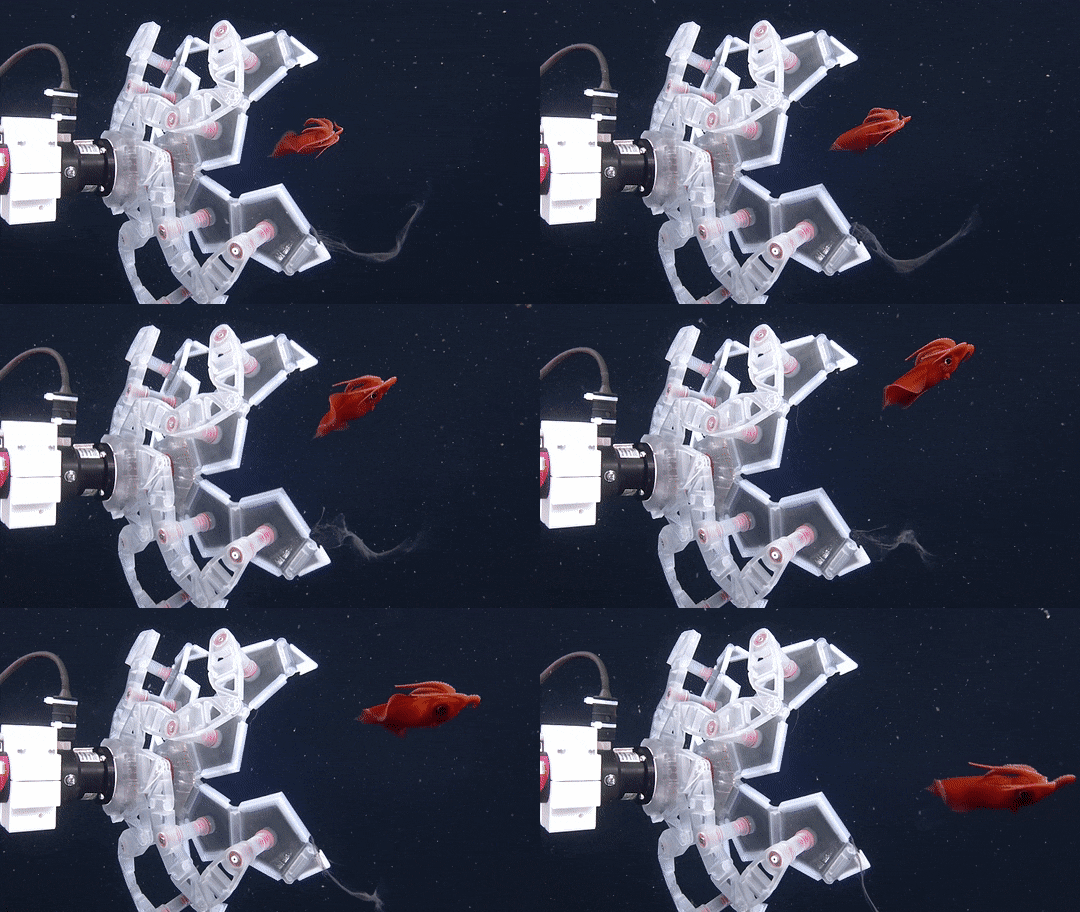
Humans like to study ocean creatures. Humans, badly adapted to spending time underwater, need tools to do that. Unfortunately, most human tools are hard, while many ocean creatures are soft and delicate. A team from Harvard University's Wyss institute (which studies "bio-inspired engineering) hopes to solve that problem with a new, soft, folding "Pokeball"-like device, described in a paper published yesterday (July 18) in the journal Science Robotics.
The device, the result of a collaboration between engineers, designers and marine biologists, looks like a soft, plastic, four-fingered claw when it's open. Then, a single motor drives it to fold along all of its joints, forming a hollow, 12-sided container around whatever it's trying to snatch, the researchers wrote. [24 Underwater Drones – The Boom in Robotics Beneath the Waves ]
The researchers tested the device, which they call a "Rotary Actuated Dodecahedron" (RAD), first at Connecticut's Mystic Aquarium and then in the open ocean near Monterey, California. Mounted to a uncrewed underwater vehicle and controlled remotely via joystick, it successfully captured squid and jellyfish unharmed, they reported.
You can watch the video demonstrating the RAD's capabilities below:
Originally published on Live Science.
Get the world’s most fascinating discoveries delivered straight to your inbox.
