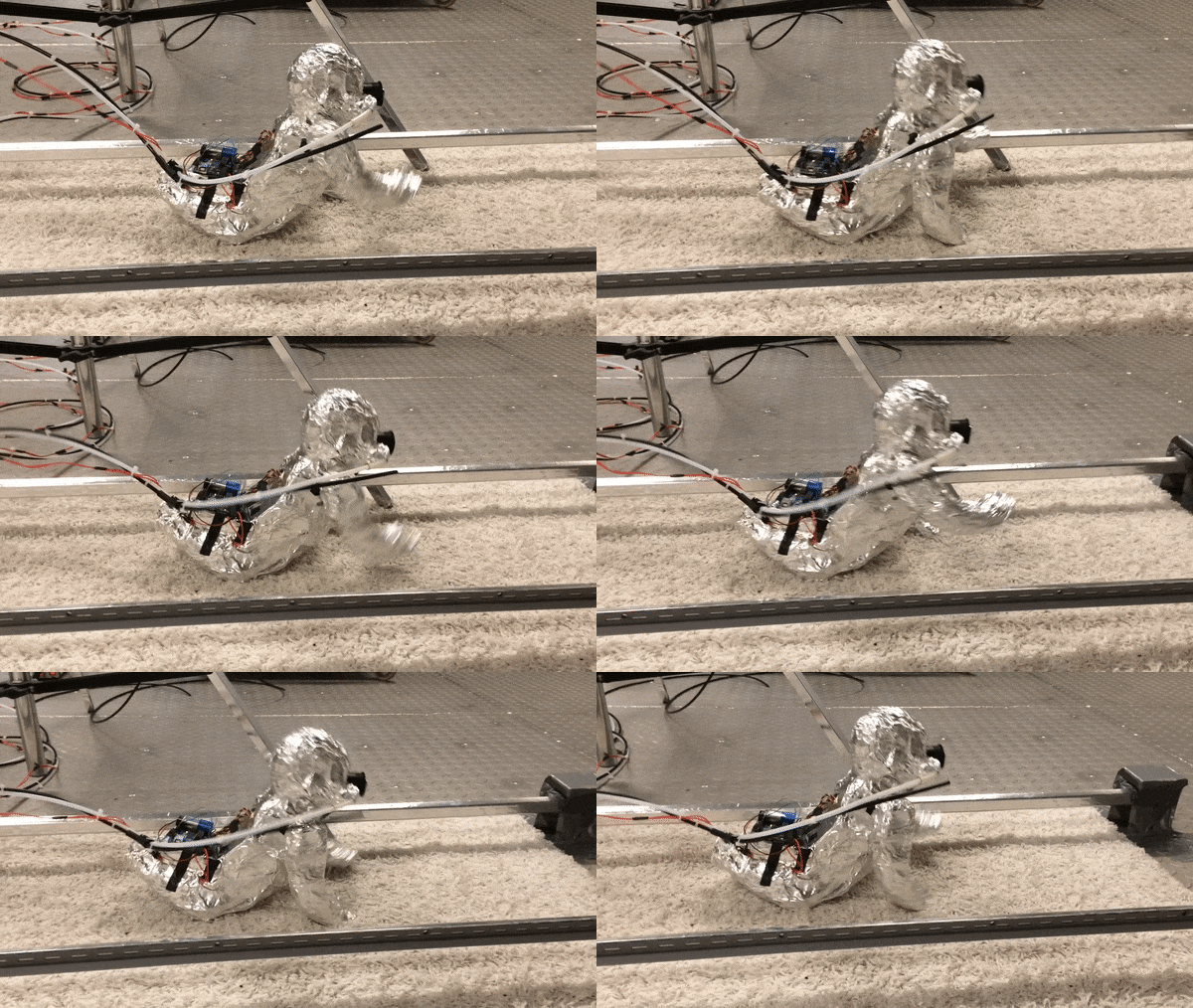
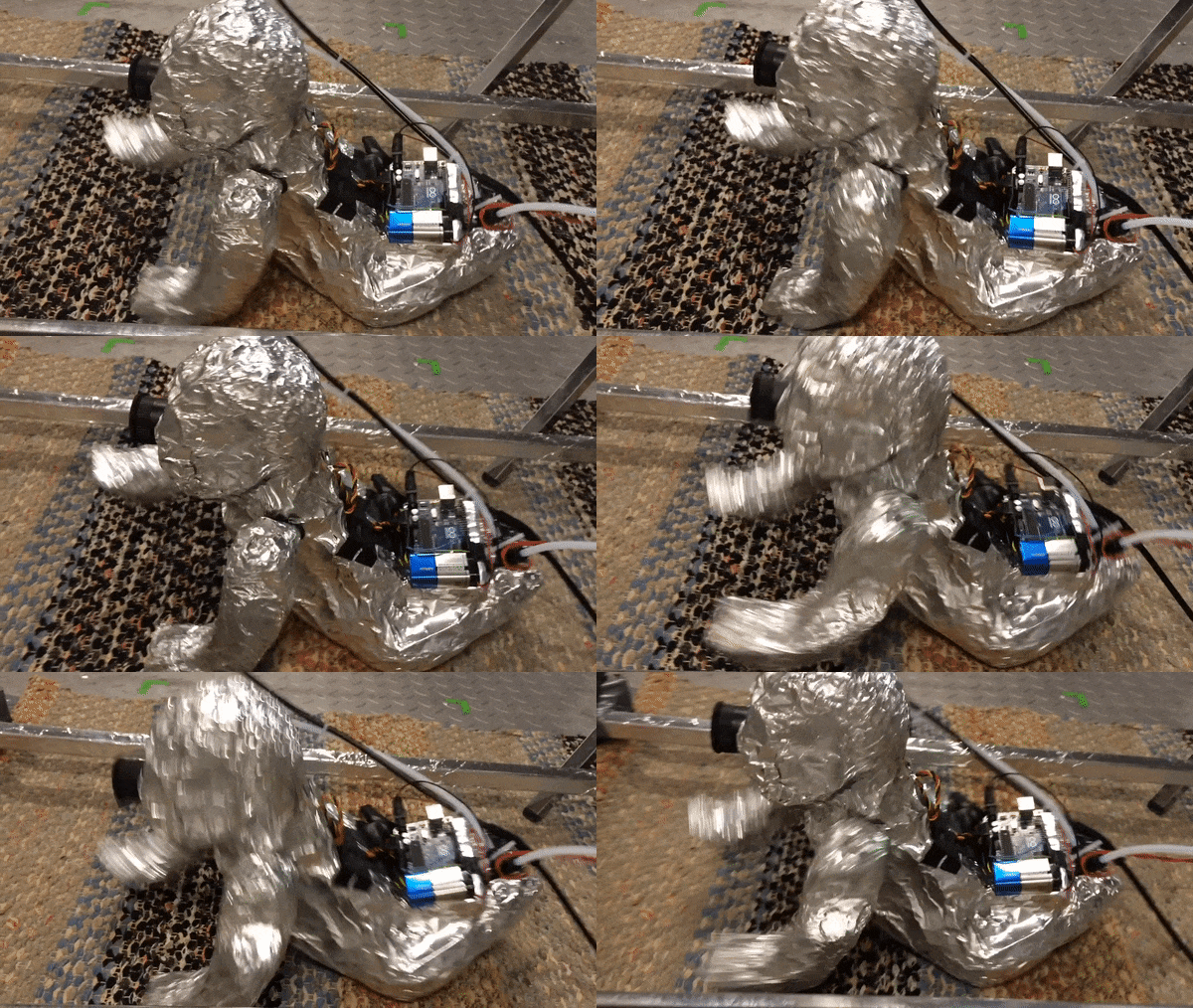
A foil-wrapped robotic half-baby that looks like it escaped from an unnerving avant-garde art installation is helping researchers to understand how much dirt, pollen, skin cells and bacteria are stirred up — and inhaled — by crawling infants.
When newly mobile babies crawl around their homes or other locations, their mouths and noses are close to the floor. Indoor environments, particularly carpeted areas, can trap a diverse collection of debris, including pollen, skin cells, dirt, fungal spores and bacteria. The new study is the first to analyze indoor debris dispersal and inhalation from a crawling baby's perspective.
To visualize how much of that debris infants might be stirring up with their vigorous movements, scientists built a robotic baby. They took a crawling baby doll and transformed it into a silvery, legless contraption that drags itself forward by paddling its arms, and whose trunk terminated in an array of wires and cables. As the robot scooted over sections of debris-rich carpets — which were taken from actual homes — the study authors collected and analyzed the particle clouds that rose up around it. [Super-Intelligent Machines: 7 Robotic Futures]
"We used state-of-the-art aerosol instrumentation to track the biological particles floating in the air around the infant in real-time, second by second," study co-author Brandon Boor, an assistant professor of civil engineering and environmental and ecological engineering at Purdue University, said in a statement.
In the dust clouds, biological material such as pollen particles, spores and bacteria cells would fluoresce when illuminated by lasers, allowing the researchers to distinguish them from nonbiological airborne materials, Boor said.
Then, a microbiology group at Finland's National Institute for Health and Welfare conducted a DNA analysis of the microbes that the researchers collected on filters.
Close to the ground, concentrations of these floating biological particles are about 20 times denser than they are higher up, the researchers discovered. The amount of material inhaled by infants was therefore significantly higher than the amount an adult would breathe in, by about four times per kilogram of body mass, the scientists reported.
Sign up for the Live Science daily newsletter now
Get the world’s most fascinating discoveries delivered straight to your inbox.
A robot baby helped researchers discover that crawling children breathe in four times what an adult would breathe in walking across the same floor.
(Image credit: Purdue University)
However, this might not be a bad thing for babies, as it could help boost their developing immune systems, according to the study.
The scientists and their nightmarish creation established a novel method for analyzing microbial exposure for mobile babies, but "much remains to be discovered" about the impacts of infants inhaling indoor dust and other particles, Boor said in the statement.
"I hope to continue to work with microbiologists and immunologists to better understand the role of indoor air microbes and allergens on early-childhood health," Boor added.
Mindy Weisberger is a science journalist and author of "Rise of the Zombie Bugs: The Surprising Science of Parasitic Mind-Control" (Hopkins Press). She formerly edited for Scholastic and was a channel editor and senior writer for Live Science. She has reported on general science, covering climate change, paleontology, biology and space. Mindy studied film at Columbia University; prior to LS, she produced, wrote and directed media for the American Museum of Natural History in NYC. Her videos about dinosaurs, astrophysics, biodiversity and evolution appear in museums and science centers worldwide, earning awards such as the CINE Golden Eagle and the Communicator Award of Excellence. Her writing has also appeared in Scientific American, The Washington Post, How It Works Magazine and CNN.