













Some Primates Share, Others (Hint, Hint) Are Stingy

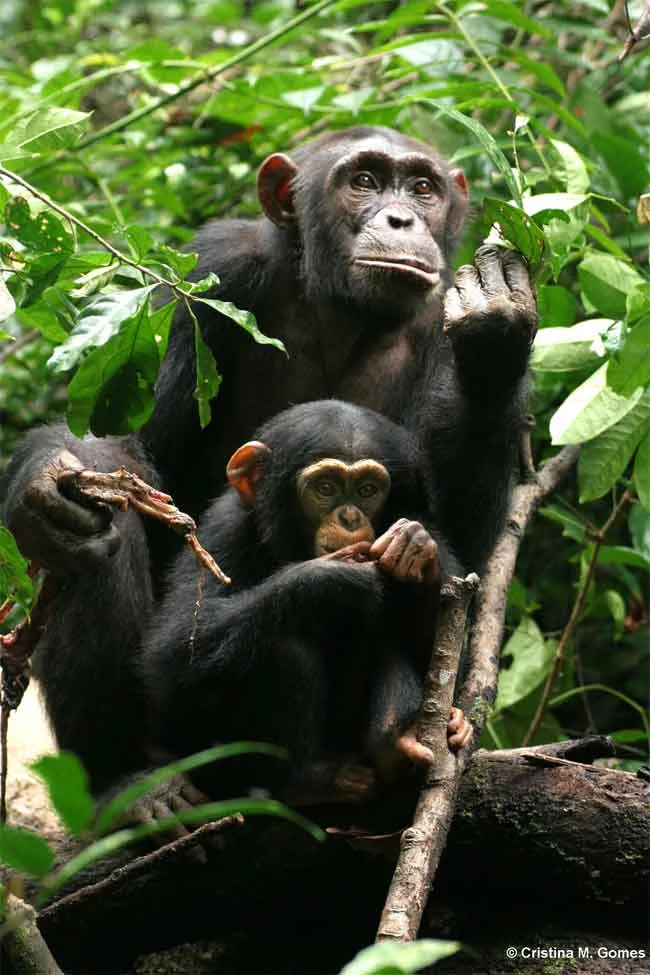
No matter how enticing the toy, bonobo apes always share, according to two recently published studies. The reason for the kind behavior: The apes' living quarters in the Congo are chockfull of food, meaning the primates don't have to compete for provisions with gorillas (as chimps do) or with each other.
Other primates are not so good at sharing, as you might have noticed.
When young, bonobos and chimps are both likely to share with their pals. But chimpanzees — like many humans — grow out of such generosity, as they are notorious for hogging food to themselves, by physical aggression if necessary. Turns out, bonobos never grow out of it. And us humans may be hard-wired to help others, but the underlying reason for generosity is looking out for ourselves, according to past research.
The finding just adds another nicety to the repertoire of our close relatives, the bonobos, which are also known to resolve conflicts through sex not violence. Both bonobos and chimpanzees, along with gorillas, orangutans and humans, are members of the great ape family.
The new results come from several experiments that measured sharing behaviors and social savvy among chimps and bonobo apes in African sanctuaries.
In one experiment in which the animals were put into an enclosure with food, younger chimps acted similarly to bonobos in their willingness to share, but older chimps were less willing to do so.
Even when coaxed to hoard, bonobos continued to be generous. For instance, the researchers gave bonobos the opportunity to keep a food pile to themselves while a fellow bonobo watched helplessly from behind a gate. The apparently altruistic bonobos universally chose to open the gate and let their friends share.
Get the world’s most fascinating discoveries delivered straight to your inbox.
"A chimp would never voluntarily do that," Hare said. "Chimps will do things to help one another, but the one thing they will not do is share food."
Another set of tests showed differences in the apes' social skills. In one, two humans concealed treats in their hands while another person was empty-handed. The animals were taught to ask for a treat by touching the hands. While chimps quickly picked up on the pattern and didn't bother begging from the empty-handed person, the bonobos were less discriminating and tried the empty hand just as much as the full ones.
In a second test of social savvy, one person held a treat and the other didn't. Once the bonobos and chimps figured out which hand was empty, the treats were swapped with the empty-handed person now concealing a snack. The chimps caught on to the new pattern much more quickly than the bonobos.
These experiments don't mean the bonobos lack intelligence, the researchers say. Rather, they are just less attuned to the social inhibitions a chimp would need to successfully share food without being slapped on the head. In chimp society, hoarding food is a privilege of rank. And so younger chimps must learn which adults can be begged from and which cannot.
The results are detailed in two research articles published in the latest issue of the journal Current Biology.
- Are You More Like Chimps or Orangutans?
- Human Evolution: Our Closest Living Relatives, the Chimps
- Top 10 Things That Make Humans Special
