














Stink Bugs Could Add Cilantro Flavor to Red Wine
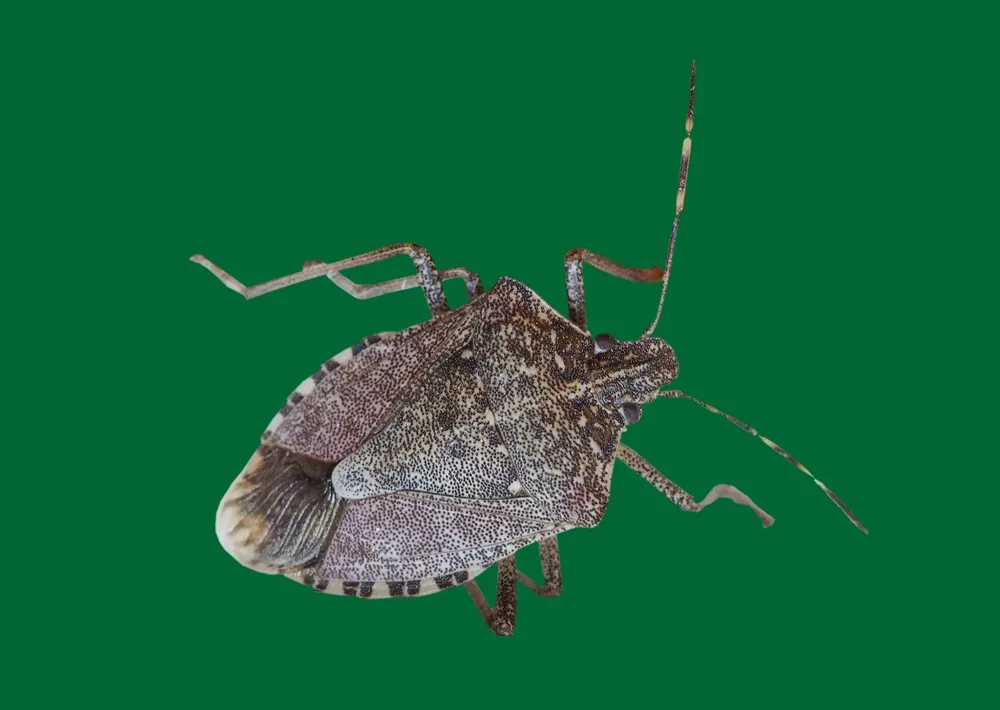
There are two kinds of people in the world: Those who eat bugs knowingly and those who eat bugs unknowingly. Oh yes, you eat bugs. Even vegans eat bugs.
While farmers and food processors want our grub to be pure, it is impossible to eliminate every single contaminant in the food supply. Crops are covered with insects, and little can be done to prevent a leg here or an antenna there from making its way into the final product.
The FDA is fully aware of this and even has a handbook that describes the allowable level of food "defects." Peanut butter, for example, can have up to 30 insect fragments per 3.5 ounces.
Wine, too, is not immune to this nuisance. Brown marmorated stink bugs, which came to North America from Asia in the mid-1900s, are fond of fruit such as grapes. During winemaking, the critters become stressed (being squashed tends to do that), and the stink bugs live up to their name by producing a compound called trans-2-decenal (T2D).
For white wines T2D isn't a problem, possibly because the chemical is modified during winemaking. But T2D is potentially troublesome for red wines, particularly pinot noir, which normally does not contain any T2D. So a team of researchers led by Elizabeth Tomasino from Oregon State University set about determining how stink bugs affected the perception of wine.
The scientists made their own wine, and tossed in a few stink bugs for added flavor. They discovered that a density of three stink bugs per grape cluster yielded wine with a T2D concentration of 2 μg/L.
That's tiny, but it's enough to be detected by consumers. In a previous study, the team found that some wine tasters could sense T2D at a concentration as low as 0.5 μg/L, though most needed a concentration roughly ten times that level. Interestingly, the volunteers' responses differed; some people liked T2D, while others found it appalling. This isn't a surprise, given that T2D is also found in cilantro. People's preferences for the aroma may come down to culture, genetics, or a combination of the two.
Get the world’s most fascinating discoveries delivered straight to your inbox.
The invasive brown marmorated stink bug appears to be spreading across America. For vintners to maintain consistency, they must take measures to limit the number of stink bugs feasting on their grapes. On the other hand, for customers who enjoy cilantro, a special stink bug-infused Two Buck Chuck could be on the menu.
Sources
(1) Pallavi Mohekar, Trina J. Lapis, Nik G. Wiman, Juyun Lim, Elizabeth Tomasino. "Brown Marmorated Stink Bug Taint in Pinot noir: Detection and Consumer Rejection Thresholds of trans-2-Decenal" Am J Enol Vitic. Published ahead of print: 17-August-2016. DOI: 10.5344/ajev.2016.15096
(2) Pallavi Mohekar, James Osborne, Nik G Wiman, Vaughn Walton, and Elizabeth Tomasino. "Influence of Winemaking Processing Steps on the Amounts of (E)-2-Decenal and Tridecane as Off-Odorants Caused by Brown Marmorated Stink Bug (Halyomorpha halys)" J. Agric. Food Chem. Published: 08-Jan-2017. DOI: 10.1021/acs.jafc.6b04268
Original article on ACSH.