














Don't Drowse and Drive: Sleepiness as Risky as DUI

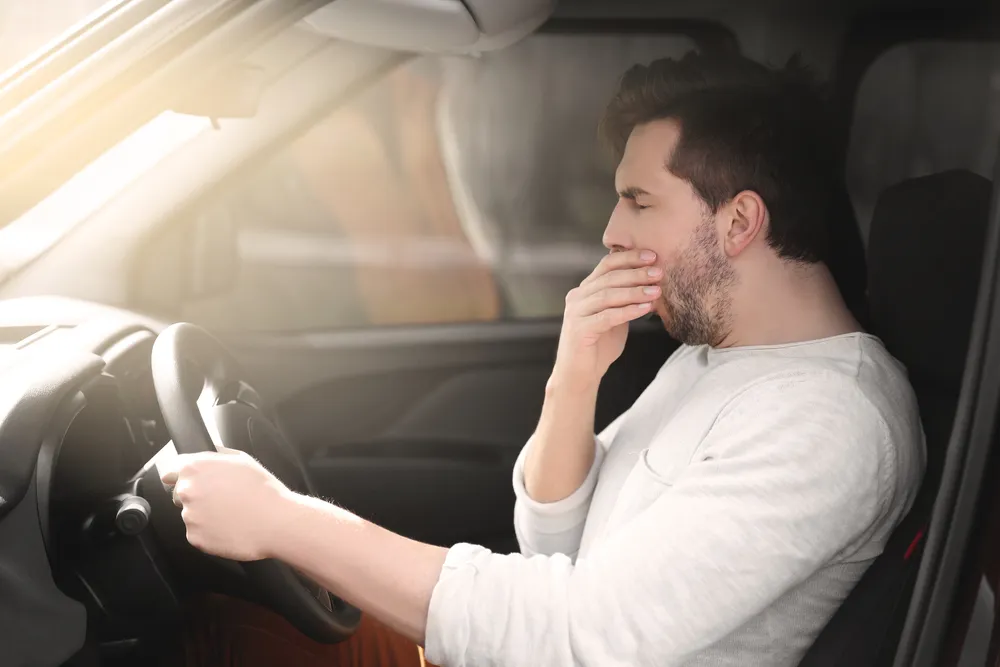
Even with holiday travel approaching, it's important to get enough sleep before getting behind the wheel: Missing 1 or 2 hours of sleep nearly doubles a person's risk for a car crash, a new report finds.
And missing 2 to 3 hours of sleep more than quadruples the risk for a crash, according to the new report, published today (Dec. 6) from the AAA Foundation for Traffic Safety. This is the same crash risk a person faces when driving over the legal limit for alcohol, according to the National Highway Traffic Safety Administration (NHTSA).
"Our new research shows that a driver who has slept for less than 5 hours has a crash risk comparable to someone driving drunk," David Yang, the executive director of the AAA Foundation for Traffic Safety, said in a statement.
The Centers for Disease Control and Prevention recommends that adults get at least 7 hours of a sleep each night. [5 Things You Must Know About Sleep]
In the new report, the researchers found that the more hours of sleep a person missed over a 24-hour period, the more his or her risk for a car crash increased, compared with people who got the recommended 7 hours of sleep.
The researchers looked at survey data from the NHTSA, which included information on more than 7,200 drivers involved in more than 4,500 crashes across the U.S. The drivers reported the number of hours of sleep they got during the 24 hours preceding their crashes.
Results showed that people who said that they got 6 to 7 hours of sleep that night, or up to 1 hour less than recommended, were 1.3 times more likely to get in a car accident than those who got the full 7 hours. Getting 5 to 6 hours of sleep, or 1 to 2 hours less than recommended, was associated with a 1.9-times increased risk of crash.
Get the world’s most fascinating discoveries delivered straight to your inbox.
But getting 4 to 5 hours of sleep a night was associated with a 4.3 times increase in the risk of a crash, and for those who got less than 4 hours of sleep, the risk increased more than 11-fold.
Among the drivers surveyed, 97 percent said that they viewed drowsy driving as a completely unacceptable behavior, according to the report. However, nearly one in three drivers admitted that they drove at least once in the past month when they were so tired they could barely keep their eyes open.
Staying safe behind the wheel
Having trouble keeping your eyes open is one symptom of drowsy driving, along with drifting from your lane and forgetting the last few miles driven. But more than half of drivers who are involved in drowsy-driving-related crashes experience no symptoms before falling asleep behind the wheel, AAA said.
Because of this, AAA recommends that people not rely on their bodies to provide the "warning signs" that they are too tired to drive. Rather, people should prioritize getting at least 7 hours of sleep each night.
AAA also recommends that on longer trips, drivers should plan to travel at times when they are normally awake, schedule a break every 2 hours or 100 miles (160 kilometers), avoid heavy foods, travel with an alert passenger and take turns driving, and avoid taking medications that cause drowsiness or other impairment.
Originally published on Live Science.
