 Live Science Plus





You are now subscribed
Your newsletter sign-up was successful
Want to add more newsletters?

Delivered Daily
Daily Newsletter
Sign up for the latest discoveries, groundbreaking research and fascinating breakthroughs that impact you and the wider world direct to your inbox.

Once a week
Life's Little Mysteries
Feed your curiosity with an exclusive mystery every week, solved with science and delivered direct to your inbox before it's seen anywhere else.

Once a week
How It Works
Sign up to our free science & technology newsletter for your weekly fix of fascinating articles, quick quizzes, amazing images, and more

Delivered daily
Space.com Newsletter
Breaking space news, the latest updates on rocket launches, skywatching events and more!

Once a month
Watch This Space
Sign up to our monthly entertainment newsletter to keep up with all our coverage of the latest sci-fi and space movies, tv shows, games and books.

Once a week
Night Sky This Week
Discover this week's must-see night sky events, moon phases, and stunning astrophotos. Sign up for our skywatching newsletter and explore the universe with us!
Join the club
Get full access to premium articles, exclusive features and a growing list of member rewards.
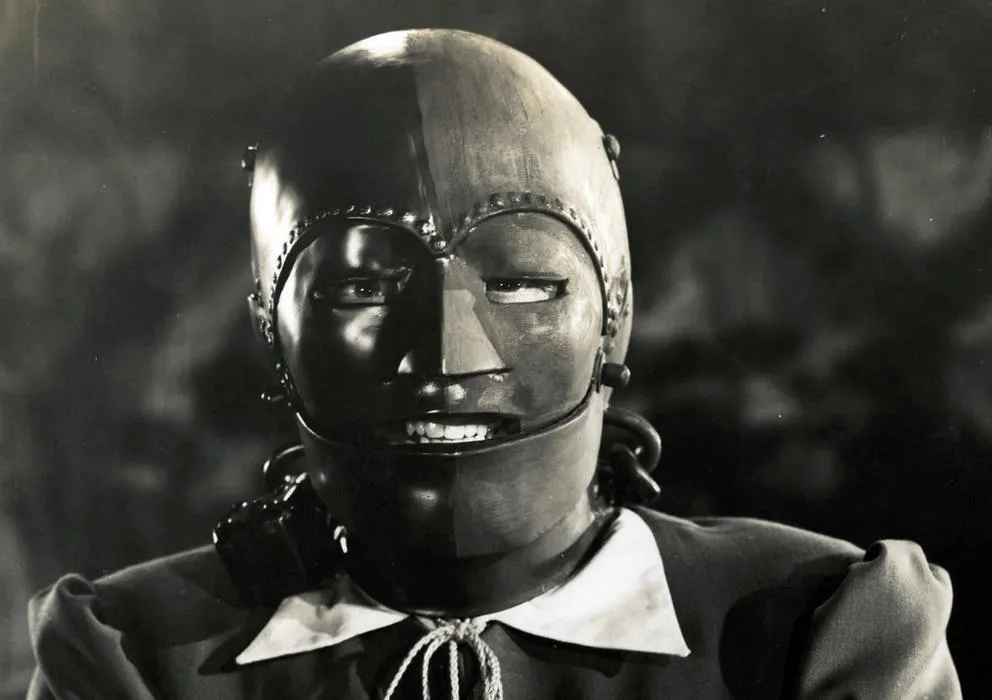
A 350-year-old French mystery has been unmasked: In his new book, Paul Sonnino, a professor of history at the University of California, Santa Barbara, claims he has uncovered the real identity of the mysterious Man in the Iron Mask.
The Man in the Iron Mask was a prisoner arrested in 1669 and held in the Bastille and other French jails for more than three decades, until his death in 1703. His identity has been an enduring mystery because, throughout his imprisonment, the man's face was hidden by a mask, according to Sonnino. The story was even popularized in the 1998 film "The Man in the Iron Mask," starring Leonardo DiCaprio.
It's a mystery that evaded even famed philosopher Voltaire and writer Alexandre Dumas. Historians have discounted the theory popularized by Voltaire and Dumas that the masked man was the twin brother of Louis XIV, according to Sonnino. [Bones with Names: Long-Dead Bodies Archaeologists Have Identified]
"They [historians] are pretty much in agreement that his name was Eustache Dauger, that he only occasionally wore the mask and that when he did wear a mask, it was velvet, not iron," Sonnino said in a statement. "They are also quite sure that he was a valet. What they have not been able to figure out is whose valet he was, and for what possible reason he was held under tight security for over 30 years."
In "The Search for the Man in the Iron Mask: A Historical Detective Story" (Rowman & Littlefield, 2016), Sonnino leads the reader through historical records, correspondence regarding the prisoner and other aspects of his investigation.
Through his research, Sonnino determined that Dauger was a valet for the treasurer of Cardinal Mazarin, who was principal minister of France during Louis XIV's early life. Mazarin accumulated a large fortune, and Sonnino believes the valet thought that some of the money was stolen.
"What I was able to determine was that Mazarin had ripped off some of his huge fortune from the previous king and queen of England …" Sonnino said. "Dauger must have blabbed at the wrong time. He was informed, when arrested, that if he revealed his identity to anyone, he would immediately be killed."
As for why the Man in the Iron Mask's identity has remained veiled throughout history, Sonnino said the blame lies with historians, who "insist on making it antiseptic, moralistic, sensible."
"Life does not make sense," Sonnino continued. "Humans are much more complicated than that."
Follow Kacey Deamer @KaceyDeamer. Follow Live Science @livescience, on Facebook & Google+. Original article on Live Science.

