













Magnets Might 'Unlock' Paralyzed Arm After Stroke

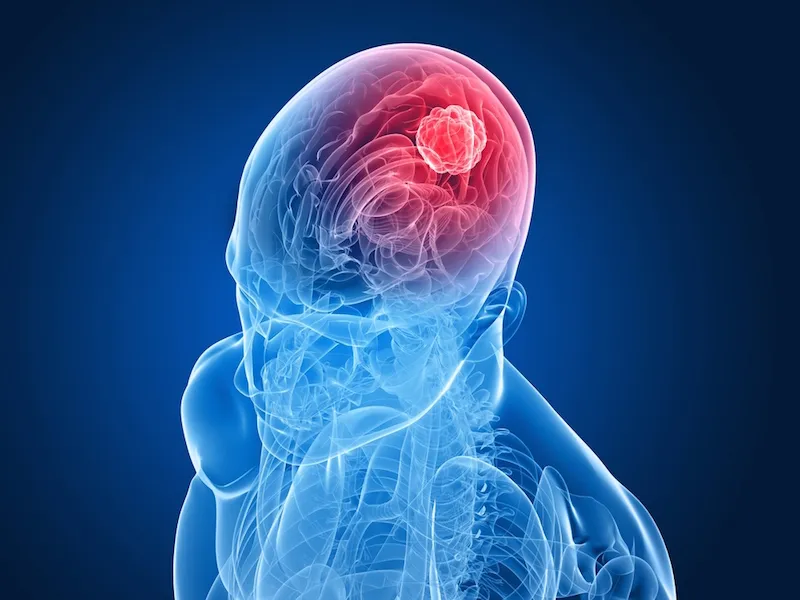
People who suffer a stroke face many physical and emotional hurdles on their long road to recovery. But now, there may be a glimmer of hope for those with one common stroke symptom: partial arm paralysis that leaves the affected limb frozen to the person's side like a broken wing.
Researchers have found that strong pulses of magnetic energy to the brain, called transcranial magnetic stimulation (TMS), can be used as probes to identify undamaged, untapped brain regions that may be recruited to move the arm. The stimulation did not cure stroke patients of their paralysis. But because the probing altered their arm movement, the researchers said it might be possible, with longer-lasting stimulation, to "teach" the brain how to use these areas to move the paralyzed arm.
Rachael Harrington, a Ph.D. student at Georgetown University Medical Center in Washington, D.C., presented this research Tuesday (Oct. 20) at the annual meeting of the Society for Neuroscience in Chicago.
Stroke is the fifth leading cause of death in the United States, killing about 130,000 Americans annually, according to the Centers for Disease Control and Prevention. A stroke occurs when blood flow to the brain is cut off, starving brain cells of oxygen.
The majority of strokes are ischemic, which means they are caused by a clot in a blood vessel. Only about 15 percent of strokes are hemorrhagic (caused by a burst in a blood vessel), but these strokes are behind about 40 percent of all stroke deaths, according to the CDC.
Regardless of stroke type, nearly 90 percent of stroke sufferers will have mild to severe paralysis of a limb on one side of their body, such as an arm and a wrist, or a leg and an ankle. Standard treatment for this paralysis is dedicated physical, occupational and speech therapy for several hours each week. [10 Things You Didn't Know About the Brain]
In 2012, scientists at the University of Victoria in British Columbia, Canada, discovered that strength training for stroke patients solely on their stronger side somehow also strengthens their weaker side. Still, for many stroke patients, no amount of exercise can "defrost" their frozen limb, and no other treatments exist.
Get the world’s most fascinating discoveries delivered straight to your inbox.
In the new study, Harrington examined the effect of TMS on 30 stroke patients, working with Michelle Harris-Love, an associate professor at George Mason University and director of the Mechanisms of Therapeutic Rehabilitation Laboratory at the MedStar National Rehabilitation Hospital in Washington, D.C.
Half of the patients in the study had mild impairment in arm movement, and the other half had severe impairment. In experiments, the researchers asked the patients to reach for an object upon seeing a "go" signal, while the researchers applied magnetic stimulation to a part of the brain called the dorsal premotor cortex. This region was unaffected by the stroke.
The research team discovered that the TMS probe had a more profound effect on the severely impaired group compared to the mildly impaired group. This suggests that, for those severely impaired by a stroke, there may be latent brain pathways that can be targed with probes and then stimulated to help them remap the brain.
Harrington explained that those with mild impairment already could move their arm a little by tapping into brain regions immediately around the damaged area. But for those with severe impairment, the brain damage caused by the stroke is too extensive to do so.
Targeted stimulation, tied to a command to move the arm, may train an entirely different part of the brain to move the limb. The researchers hope that, with repeated stimulation, they can train the brain to control the impaired arm.
Ideally, the stimulation should be incorporated into the standard rehabilitation exercises, particularly occupational therapy, when the patient is relearning how to perform basic tasks, such as brushing their teeth or pouring a glass of water, the researchers said.
"Stimulating this area repeatedly may force the brain to use this latent area," Harrington said. "Neurons that fire together wire together," she added, citing a famous phrase in neuroscience to imply that the brain can make new associations to remap itself to undertake basic commands.
The science team noted that its work, though promising, is basic research and years away from clinical application.
Editor's note: This story was updated on Oct. 23 in order to clarify that the researchers consider the TMS procedure a probe, that may illuminate the brain areas involved, rather than a treatment for paralysis in itself. The story was also updated to clarify the difference between the responses of the severely affected group compared with the mildly affected group.
Follow Christopher Wanjek @wanjek for daily tweets on health and science with a humorous edge. Wanjek is the author of "Food at Work" and "Bad Medicine." His column, Bad Medicine, appears regularly on Live Science.

Christopher Wanjek is a Live Science contributor and a health and science writer. He is the author of three science books: Spacefarers (2020), Food at Work (2005) and Bad Medicine (2003). His "Food at Work" book and project, concerning workers' health, safety and productivity, was commissioned by the U.N.'s International Labor Organization. For Live Science, Christopher covers public health, nutrition and biology, and he has written extensively for The Washington Post and Sky & Telescope among others, as well as for the NASA Goddard Space Flight Center, where he was a senior writer. Christopher holds a Master of Health degree from Harvard School of Public Health and a degree in journalism from Temple University.