
 Live Science Plus


'Lost' Memories Restored in Mice

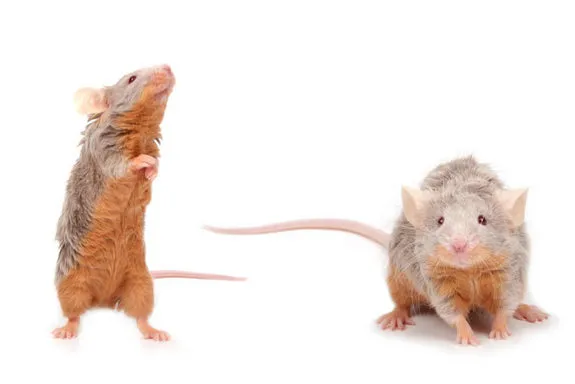
In a feat that calls to mind the memory-tweaking technology in the film "Eternal Sunshine of the Spotless Mind," a team of researchers restored "lost memories" in the brains of mice.
The mice in the study were given a drug that prevented them from consolidating a fearful memory. But when neurons involved in encoding the memory were stimulated with pulses of light, the animals were able to retrieve the forgotten recollection.
In some forms of amnesia, past memories may not be erased, but may just be inaccessible for recall, said Susumu Tonegawa, director of the RIKEN Brain Science Institute in Japan and co-author of the study, said in a statement. The study was published today (May 28) in the journal Science. [5 Wild Facts About Your Memory]

If the findings are confirmed in humans, the knowledge could benefit people who suffer from retrograde amnesia, an inability to recall memories that were made before the amnesia, which is common in traumatic brain injury, Alzheimer's disease and other brain disorders.
Scientists have long debated whether retrograde amnesia results from damage to the neurons that store memories, or from a blockage of access to those memories. The majority of researchers support the storage problem theory, but this is "probably wrong," Tonegawa said.
When a memory is being formed, scientists think a population of neurons is activated and undergoes lasting physical or chemical changes. This collection of neurons is known as memory engram cells, and they can be triggered by a specific sight or smell, for instance.
In 2012, Tonegawa and his colleagues showed that a population of these engram cells exists in a brain region called the hippocampus, which is known to be involved in converting information from short-term to long-term memory. But, it wasn't clear if these groups of neurons undergo the chemical changes linked to memory consolidation.
Get the world’s most fascinating discoveries delivered straight to your inbox.
In the new study, Tonegawa's team pinpointed a group of engram cells in the hippocampus of mice, using a technology called optogenetics. The technique involves injecting a virus into neurons that causes them to produce a light-sensitive protein, which makes the cells activate in response to light.

The researchers put mice in a chamber where they received a mild electric shock, and the animals quickly learned to associate the shock with the chamber. When the mice were returned to the same chamber a day later, they would freeze in fear.
After the training, the scientists gave some of the mice a chemical called anisomycin, which inhibits memory consolidation. When the mice were placed in the chamber again, they no longer froze in place, suggesting the memory of the painful shock had not been consolidated.
However, when the researchers used pulses of light to activate the neurons that encoded the electric shock memory, the mice would "remember" their fear, and freeze again when placed in the chamber.
The findings suggest that in the mice that received the memory-blocking drug, the fearful memory was not really "lost," but rather access to the memory was simply blocked, the researchers said.
"These findings are probably applicable to certain conditions of human amnesia, such as an early stage of some Alzheimer's patients," Tonegawa said.
Follow Tanya Lewis on Twitter. Follow us @livescience, Facebook & Google+. Original article on Live Science.
