













Kids with 'Night Terrors' More Likely to Sleepwalk

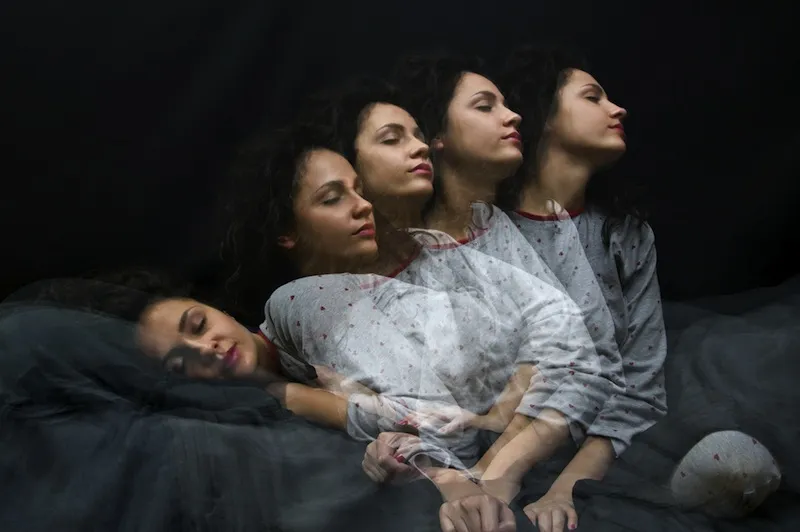
Young children who get "night terrors" could be at greater risk for sleepwalking later in life, a new study from Canada suggests.
Researchers analyzed information from about 2,000 children born in Quebec, who were followed from age 5 months to 13 years old.
About half of children in the study had experienced a night terror at some point between ages 1 and 13. In such an event, the child wakes up suddenly crying or screaming, and is sometimes confused and drenched in sweat. Additionally, about 30 percent of children sleepwalked at some point between ages 2 and 13 years old.
Night terrors were most common in younger children, whereas sleepwalking was most common at age 10.
But children who experienced night terrors before age 4 were nearly twice as likely to sleepwalk later in childhood, compared with children who didn't experience early night terrors, the study found. Overall, 34 percent of kids with early childhood night terrors sleepwalked later in life, whereas 22 percent of kids who didn't have early night terrors later sleepwalked. [Top 10 Spooky Sleep Disorders]
The study also found that if parents were sleepwalkers, their children were more likely to experience both sleepwalking and night terrors.
"These findings point to a strong genetic influence on sleepwalking and … sleep terrors," the researchers at the Hopital du Sacre-Coeur de Montreal wrote in their article, published online today (May 4) in the journal JAMA Pediatrics.
Get the world’s most fascinating discoveries delivered straight to your inbox.
About 32 percent of children who have persistent night terrors (meaning the children still had night terrors after age 5) had a parent who had sleepwalked at some point. By contrast, 16 percent of children whose parents had never sleepwalked experienced persistent night terrors.
In addition, children were 3 to 7 times more likely to sleepwalk if their parents were also sleepwalkers.
"Parents who have been sleepwalkers in the past, particularly in cases where both parents have been sleepwalkers, can expect their children to sleepwalk, and thus should prepare adequately," the researchers said.
Avoiding sleep deprivation and noisy sleep environments may help prevent sleepwalking and night terrors, the authors said. In serious cases of sleepwalking, parents may also need to set a house alarm to prevent children from leaving the house, the authors wrote.
The findings also lend support to the hypothesis that sleepwalking and night terrors are actually different symptoms of the same underlying condition, the study authors said. The two conditions share many similar characteristics: They both arise during the same stage of sleep; can both be triggered by sleep deprivation, medication or fever; and both run in families. This led some researchers to hypothesize that the two conditions were related.
Follow Rachael Rettner @RachaelRettner. Follow Live Science @livescience, Facebook & Google+. Original article on Live Science.

Rachael is a Live Science contributor, and was a former channel editor and senior writer for Live Science between 2010 and 2022. She has a master's degree in journalism from New York University's Science, Health and Environmental Reporting Program. She also holds a B.S. in molecular biology and an M.S. in biology from the University of California, San Diego. Her work has appeared in Scienceline, The Washington Post and Scientific American.