













Climate Change Affects Shark Swimming in Strange Way

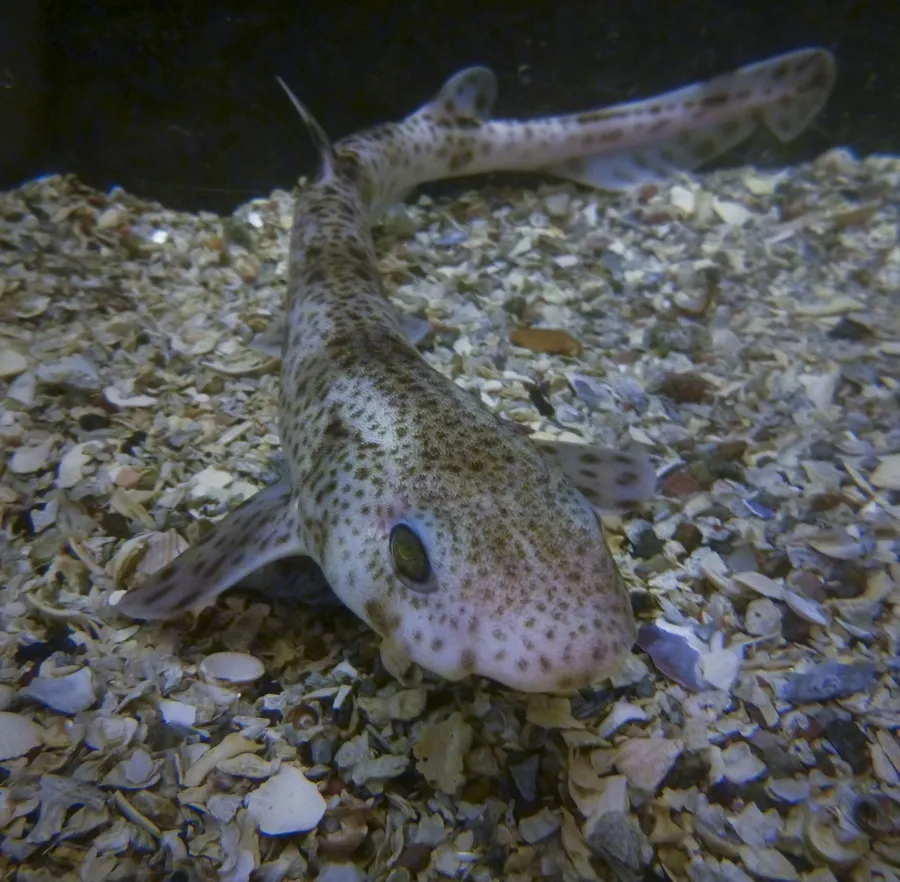
Sharks exposed to ocean water acidified by too much carbon dioxide alter their behavior, swimming in longer spurts than sharks in typical ocean water, particularly during their nighttime wanderings.
The new findings, published today (Sept. 16) in the journal Biology Letters, are troubling, given that one effect of the human consumption of fossil fuels is to make ocean water more acidic. If fossil fuel burning continues as is, sharks may face even more challenges than they do today — when a quarter of species are already at risk of extinction.
"Usually when you expose a fish to some kind of environmental stressor, they usually acclimate to that stressor, and that makes them less vulnerable to that stressor," said study researcher Fredrik Jutfelt, an animal physiologist at the University of Gothenburg in Sweden. "But here, it seemed like this high CO2 [carbon dioxide] continued to be a stressor to these sharks for quite a long time." [On the Brink: A Gallery of Wild Sharks (Photos)]
Acidifying oceans
The world's oceans absorb carbon dioxide from the atmosphere, a process that decreases the pH (a measure of how acidic or basic a substance is) of ocean water, turning it more acidic. According to the National Oceanic and Atmospheric Administration (NOAA), the pH of ocean surface water has fallen by 0.1 on the 14-point scale since the beginning of the Industrial Revolution. That drop on the pH scale translates to surface water that's 30 percent more acidic than before.

Today, ocean water has a pH of about 8.1, Jutfelt told Live Science, and the atmosphere contains about 400 parts per million of carbon dioxide. If humans continue to load the atmosphere with carbon, this concentration is expected to rise to about 1,000 parts per million by 2100. In that scenario, the pH of ocean water is expected to drop to about 7.7 or 7.8. The pH scale runs from 0 (most acidic) to 14 (most basic), with a pH of 7 being neutral.
Studies of bony fishes have found that some species react catastrophically to acidified water, while others are quite tolerant, Jutfelt said. But hardly anyone had examined the effects of ocean acidification on sharks and rays, fish known for their cartilaginous bones.
Get the world’s most fascinating discoveries delivered straight to your inbox.
Strange swimming
Jutfelt and his colleague Leon Green, also of the University of Gothenburg, borrowed 20 small-spotted catsharks (Scyliorhinus canicula), from a local aquarium. This small, common bottom-dweller is found throughout the Atlantic Ocean and Mediterranean Sea. They put half of the sharks in tanks filled with typical ocean water with a pH of 8.1, and half in tanks filled with acidified ocean water with a pH of about 7.7 for four weeks. [8 Weird Facts About Sharks]

After this period, the researchers tested the sharks on a variety of physiological responses and behaviors, including their blood pH and oxygen consumption rates. They also took video of the sharks at night, when these nocturnal animals are most active.
Although the CO2-exposed sharks' metabolisms were normal, the researchers found more sodium and bicarbonate ions in their blood, apparently a molecular adjustment made to keep the sharks' blood pH stable in the more-acidic water. Most strikingly, however, was the discovery that the sharks in the acidified water exhibited odd nighttime behavior.
"The control sharks, they would have these many starts and stops throughout the night. They would swim for a few seconds, or up to a minute, maybe, and then stop," Jutfelt said. "But the CO2-exposed sharks, they kept swimming for longer time periods. Some of them swam for an hour continuously."
This continuous swimming behavior could have been a result of altered ion concentrations in the brain, Jutfelt said. Alternatively, the sharks could have sensed that the water was too acidic and kept swimming in hopes of finding better-quality water elsewhere. Surprisingly, Jutfelt said, the sharks kept up this behavior change four to six weeks after first being introduced to the acidified water.
"They don't seem to be able to completely acclimate," he said.
Jutfelt and his colleagues aren't yet sure what the behavior change would mean for sharks in the wild. But sharks reproduce slowly, often taking years to reach sexual maturity. That means there are few generations of sharks between today's and the sharks that will likely be exposed to 7.7-pH ocean water by the year 2100.
"They basically don't have that many generations before we reach those CO2 levels, so we don't think evolution will be able to have a major effect and produce tolerance," Jutfelt said. "Which is why any problem with sharks might be more alarming than with other organisms."
Follow Stephanie Pappas on Twitter and Google+. Follow us @livescience, Facebook & Google+. Original article on Live Science.

Stephanie Pappas is a contributing writer for Live Science, covering topics ranging from geoscience to archaeology to the human brain and behavior. She was previously a senior writer for Live Science but is now a freelancer based in Denver, Colorado, and regularly contributes to Scientific American and The Monitor, the monthly magazine of the American Psychological Association. Stephanie received a bachelor's degree in psychology from the University of South Carolina and a graduate certificate in science communication from the University of California, Santa Cruz.