
















On the Brink: A Gallery of Wild Sharks

Whale Sharks

Whale sharks are the largest shark and largest fish species swimming around in the seas. They can weigh as much as an elephant.
A Gallery of Wild Sharks

Whale sharks are considered filter feeders, as they filter tiny fish from the water using the fine mesh of their gill-rakers.
Great White Shark
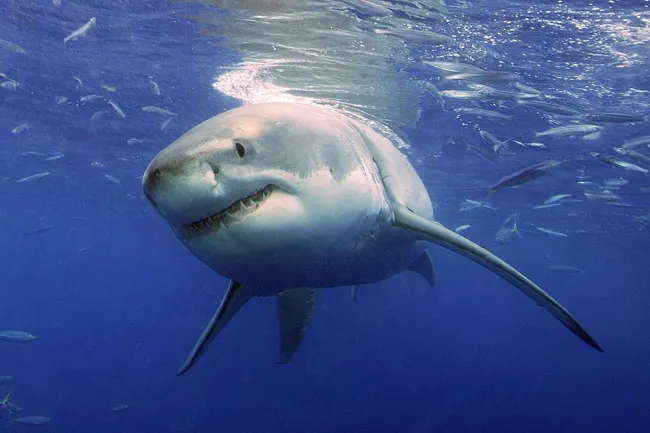
A great white shark cruises underwater in search of prey.
Great White Sharks
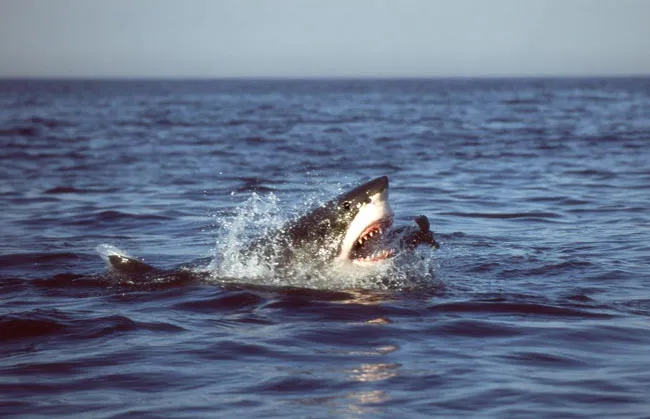
Great white sharks, among nature s most capable predators, hunt in a certain area, much like criminals operating from a house, scientists recently learned. Here a great white successfully lunges for and captures a juvenile fur seal in False Bay, South Africa.
Blacktip Sharks

Atlantic blacktip sharks are known to breach out of the water while feeding, sometimes spinning a few times around their axis. The spinning breach could help the sharks vertically attack fish below as they plunge back into the water.
Shark Tooth

Teeth such as this from the extinct 40-foot-long shark Carcharocles megalodon are common in the Sharktooth Hill Bone Bed because, like modern sharks, these extinct sharks also shed teeth throughout their lives.
Shark Fins

A man lays out illegally harvested shark fins. Scientist say some 38 million sharks are killed every year just for their fins.
Get the world’s most fascinating discoveries delivered straight to your inbox.
Bonnethead Shark

Females of this small hammerhead shark species were thought to mate with several males and store their sperm for later use, so scientists assumed the resulting litter of baby sharks would have several different fathers. It was thus a surprise when studies revealed most litters are sired by the sperm of just one father. The finding suggests the females are either sexually monogamous, mating with only a single male, or that they mate with many males but that the sperm of one out-competes the others.
Thresher Shark

Thresher sharks are so named for their long tails -- which are shaped like the tools farmers use to separate wheat -- which they sometimes use to stun prey. Like most large sharks, thresher sharks grow slowly, requiring as much as 14 years to mature. They are found in tropical oceans around the world and are known to migrate.
Tiger Shark
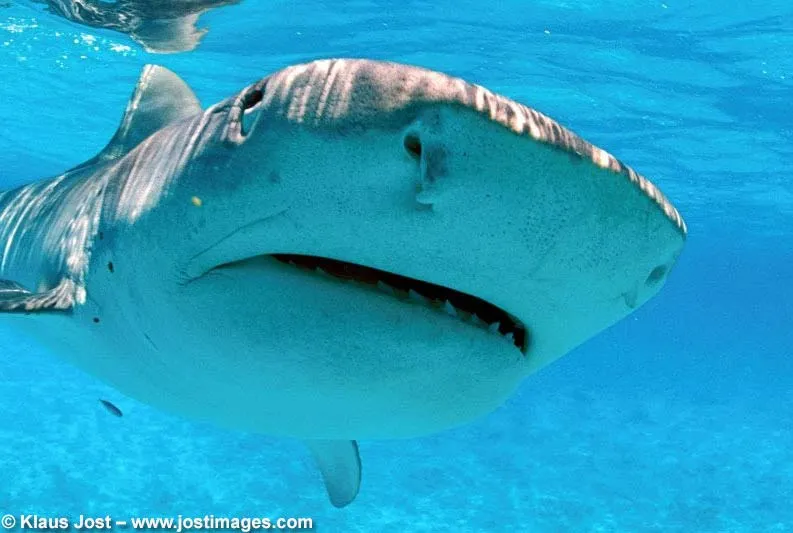
Tiger sharks are stocky barrel-shaped sharks that can grow up to 11 feet in length. They are solitary predators and are known to hunt a wide variety of animals, including other sharks and sometimes humans. Tiger sharks get their name from the dark stripes along their backs that fade as the sharks grow older.
Shark Feats

Scientists found a fossilized shark that swallowed a crocodile-like amphibian that, in turn, had gobbled up a fish. It all happened roughly 290 million years ago, before the emergence of the dinosaurs. It s the first time researchers have found direct evidence of such a complex, extinct food chain.
