













3 New Ozone-Munching Gases Found in Atmosphere

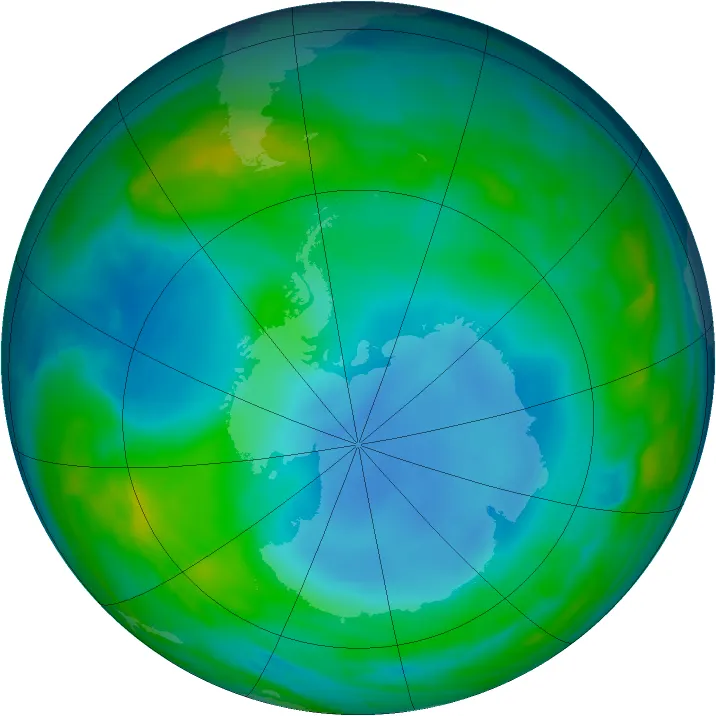
Three newly discovered man-made gases have joined the growing list of chemicals that can destroy Earth's protective ozone layer, but these new compounds likely pose little threat to ozone because they're found in such low concentrations, a new study reports.
The previously unknown compounds — two new chlorofluorocarbons (CFCs) and one new hydrochlorofluorocarbon (HCFC) — were spotted by an international team led by researchers at the University of East Anglia in the United Kingdom. The scientists discovered the atmospheric gases by analyzing air samples collected at a relatively unpolluted research station at Cape Grim, Tasmania, from 1978 to 2012, and from instruments aboard commercial flights.
The three compounds exist in relatively low quantities in the atmosphere, and none appear to be drastically increasing in concentration in recent years, said study co-author Johannes Laube, a researcher at the University of East Anglia.
"The three compounds are not a significant threat to the ozone layer nor have they been in the last four decades," Laube told Live Science by email. "That is quite reassuring to know." [Top 10 Ways to Destroy Earth]
The findings were published today (June 3) in the journal Atmosphere.
Because of their destructive effect on protective ozone, use of CFC compounds was limited in 1987 by the Montreal Protocol, and a total global ban went into effect in 2010. The ozone layer blocks cancer-causing UV rays. Scientists discovered a huge ozone hole above Antarctica in the 1980s, which is now slowly healing.
In March, Laube and his colleagues also identified new CFC and HCFC gases that represent a more serious threat to the Antarctic ozone hole. Before March 2014, seven CFCs and six HCFCs (which were introduced as replacements for CFCs) were known to destroy ozone. The count has now expanded to 12 CFCs and eight HCFCs, and could still rise as the researchers continue to analyze additional air samples, Laube said.
Get the world’s most fascinating discoveries delivered straight to your inbox.
"There's a lot more man-made trace gases in the atmosphere than we thought, and we can find out whether these are still being emitted or not," Laube said. "This is an important and independent control mechanism on the Montreal Protocol."
Measurements show one of the three newfound compounds may come from Southeast Asia, Laube said.
The newly identified CFCs could be related to either legal loopholes in the Montreal Protocol or illegal chemical production. The Montreal Protocol allows trace amounts of the chemicals to be used in the production of certain products, including some types of insecticides and cleaning solvents.
The new CFCs are related to compounds used in the production of refrigerants, and the new HCFC is similar to products used as coating, solvent and cleaning agents, the study reports.
Email Becky Oskin or follow her @beckyoskin. Follow us @livescience, Facebook & Google+. Original article on Live Science.
