













Keeping cool
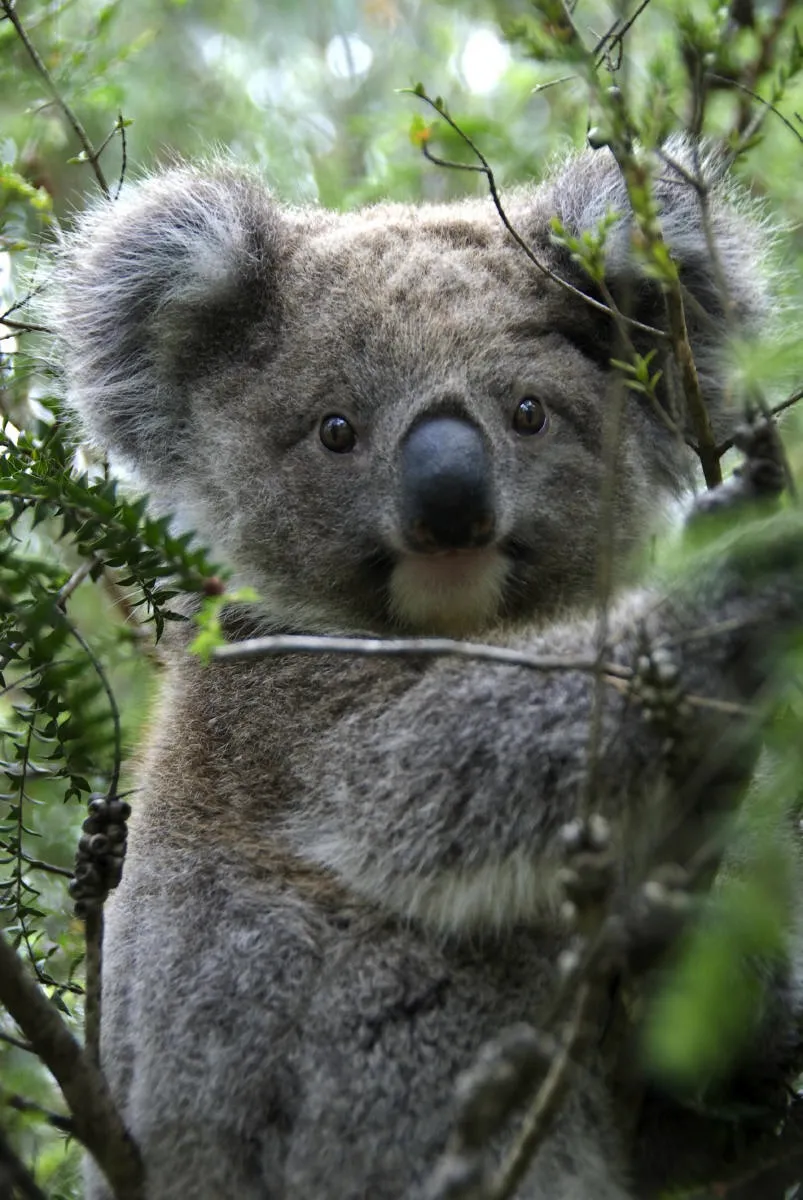
A 2014 study has found that koala bears hug trees to keep cool.
Cooler trunks

On hotter days, the trunks can be several degrees cooler than the ambient air temperature, and the koalas drape their whole bodies on the cooler branch.
Koala bears

Here, a male koala bear perches on a tree branch. On cooler days the marsupials don't cling so tightly to the branches.
Cooler trunks

Here, an image shows the temperature difference between the koala bear and the tree it is resting on.
Infrared

A koala hugs a tree to keep cool.
Avoiding panting

Koalas pant in order to cool themselves, but hugging cool tree trunks means they don't have to waste precious water panting.
Climate change

The findings could have implications for how the koala's distribution will change with climate change, the researchers said.
Get the world’s most fascinating discoveries delivered straight to your inbox.

Tia is the editor-in-chief (premium) and was formerly managing editor and senior writer for Live Science. Her work has appeared in Scientific American, Wired.com, Science News and other outlets. She holds a master's degree in bioengineering from the University of Washington, a graduate certificate in science writing from UC Santa Cruz and a bachelor's degree in mechanical engineering from the University of Texas at Austin. Tia was part of a team at the Milwaukee Journal Sentinel that published the Empty Cradles series on preterm births, which won multiple awards, including the 2012 Casey Medal for Meritorious Journalism.