













Why Execution Drugs Don't Always Work as Planned

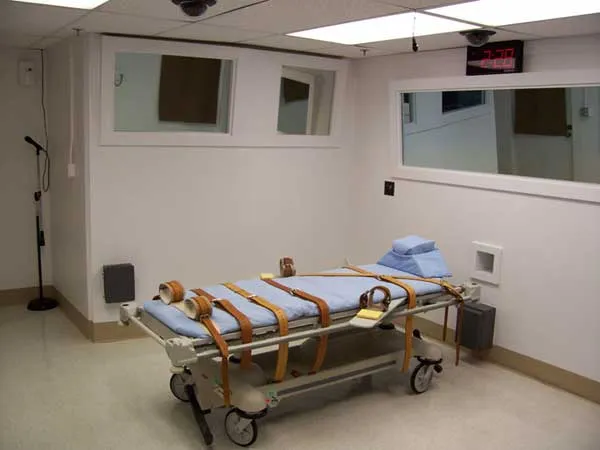
After Oklahoma death-row inmate Clayton Lockett received a lethal injection, he lived for 43 minutes, convulsing and writhing on the gurney before finally dying of a heart attack, according to news reports.
Lockett's botched execution and others like it bring up questions about how execution drugs work, and why they sometimes don't work as expected. These cases have also prompted some to label such executions as cruel and unusual punishment. Now, some defendants demand the right to know exactly what drugs are in the series of life-ending injections they are being administered.
Deadly cocktail
Lethal injections usually involve two or three drugs administered in sequence, said Dr. John DiCapua, an anesthesiologist at North Shore-LIJ Health System in Great Neck, N.Y. First, a drug is given to induce unconsciousness. Then, drugs are injected to stop the breathing and/or stop the heart. [Execution Science: What's the Best Way to Kill a Person?]
"The way a body dies [in a lethal injection] is from lack of oxygen to the tissues, causing them to stop functioning," DiCapua said.
But the drugs must be administered correctly in order to be effective, DiCapua told Live Science. Giving anesthesia is not something that can be learned quickly; it takes years of training, he said.
In last night's execution in Oklahoma, executioners used the sedative midazolam, according to reports. This drug is often used before medical procedures or during surgery because it causes drowsiness, relieves anxiety and prevents memory of the event. Then, the officials injected a drug called vecuronium bromide, which paralyzes muscles, to stop the breathing, and potassium chloride to stop the heart.
Get the world’s most fascinating discoveries delivered straight to your inbox.
When drugs go wrong
Different doses of these drugs are required in order for them to be effective in different people. Midazolam, for example, requires a fairly variable dose, so it may require 10 times the dose to achieve unconsciousness in one person versus another, DiCapua said. Some people may also have developed a tolerance to certain drugs, requiring a larger dose to be effective.
While it's unclear exactly what went awry in Lockett's execution, doctors have determined the intravenous line going into his vein had exploded. Although vein problems can occur during executions, Lockett's appeals team claimed something was wrong with the drugs or the way they were administered, NBC News reported.
Lockett's lawyers also said the three-drug cocktail used in his execution was experimental. According to NBC News, the drug combination had been used before in Florida, but not in Oklahoma. A different dosage of midazolam in Lockett's execution, compared with ones in Florida.
In January, Ohio executed convicted murderer and rapist Dennis McGuire using a combination of drugs never before tested in an execution. Officials administered midazolam in combination with a painkiller called hydromorphone (sometimes called dihydromorphinone), a morphine derivative that can stop breathing or the heart.
After McGuire received the injections, he held still for almost five minutes, then made loud snorting noises for the next few minutes, before being pronounced dead, according to the Associated Press. The process lasted more than 15 minutes, the AP reported.
The issue of performing executions is complicated by the difficulty of obtaining drugs for lethal injections these days. In the past, the most commonly used drugs for lethal injection were sodium thiopental, pancuronium bromide and potassium chloride. But the sole American manufacturer of sodium thiopental stopped making the anesthetic drug in 2011, citing a supply shortage.
States have attempted to obtain the drugs from European manufacturers, but people in countries that do not have the death penalty object to the use of their drugs in executions, so U.S. states have been forced to switch to different drugs.
Cruel and unusual punishment?
Executions like Lockett's and McGuire's have spurred challenges to the use of lethal injections on both legal and ethical grounds.
Legally, challengers argue that botched lethal injections constitute cruel and unusual punishment, which is prohibited by the Eighth Amendment to the U.S. Constitution. Defendants have also sued for the right to know what specific cocktail of drugs is being administered.
"The law is unclear on these issues," and states are resisting these challenges, said John Thomas, a law professor at Quinnipiac University in Hamden, Conn.
However, Thomas told Live Science he suspects challengers will win the battle to know what drugs are being given, because it's the only way to know whether the drugs are, in fact, cruel and unusual punishment.
Ethically, lethal injection has a long history of opposition. The Hippocratic oath historically taken by doctors states, "first, do no harm," so some organizations claim it's unethical for doctors to assist in killing inmates.
In the past, other execution methods — such as hanging or the electric chair — have been abandoned in the United States as cruel and unusual punishment. Maybe lethal injection will go that way too, Thomas said.
"If we find out this method is not very good, what kind of method is left?" he said.
Follow Tanya Lewis on Twitter and Google+. Follow us @livescience, Facebook & Google+. Original article on Live Science.
