
 Live Science Plus


Titanium Golf Clubs Spark Wildfire Concerns


There are a number of hazards in golf: sand traps, the "rough," lakes and other water hazards, and two-for-one happy hour at the 19th hole.
You can now add wildfires to that list. Experts are blaming two recent blazes in Orange County, Calif. — one of which burned 25 acres and injured a firefighter in 2010 — on golfers.
But it's not golfers' cigarette butts, matches or pyromania that's starting wildfires; researchers believe that titanium golf clubs are responsible for sparking fires. [The Twisted Physics of 5 Olympic Sports]

"That was hard for anybody to believe," Steve Concialdi of the Orange County Fire Authority told The New York Times. "We were thinking they were started by cigars or cigarettes."
Golfers and fire authorities were baffled by the blazes until they called on James Earthman, a materials-science expert at the University of California, Irvine. Earthman's curiosity was piqued when he heard that golfers involved in both wildfires had used titanium-alloy clubs to hit golf balls that were out of bounds in dry, rocky areas.
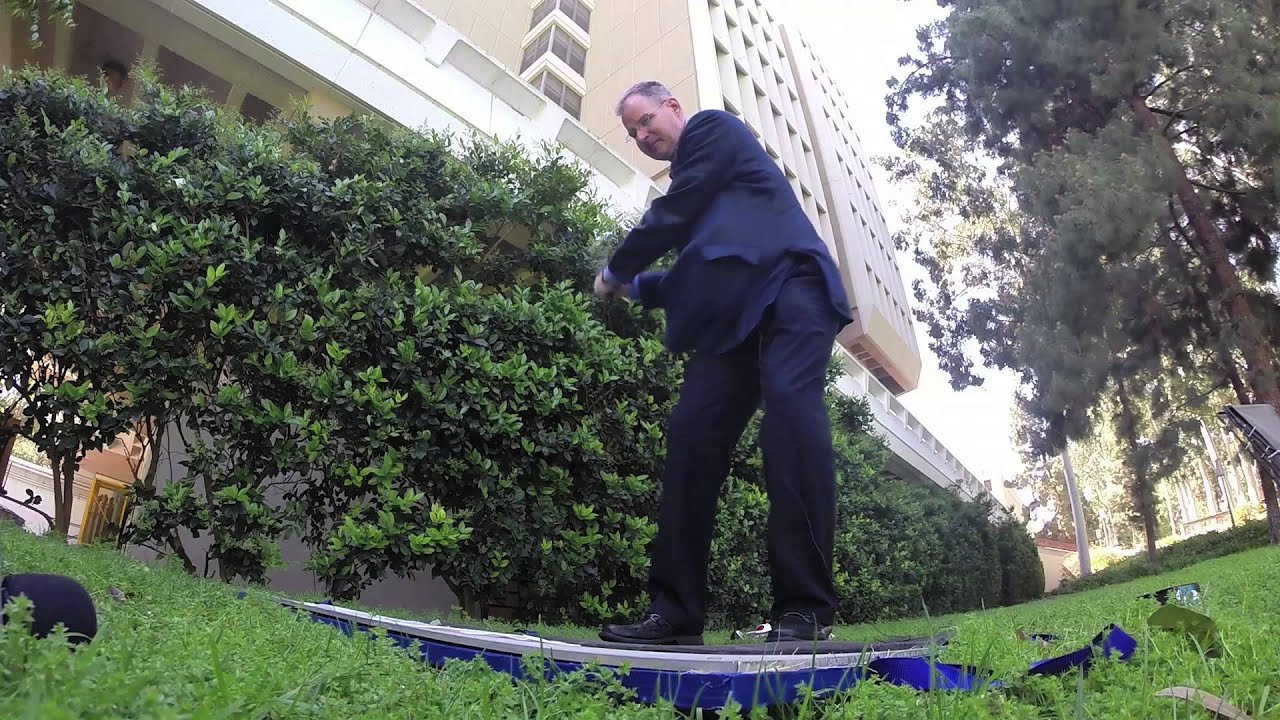
Earthman and his colleagues conducted an experiment comparing titanium and stainless-steel golf clubs. Titanium is used in golf clubs — and in medical devices, aircraft, missiles and ships — because it is strong and lightweight.
Pure titanium is a lustrous, white metal. In addition to its strength and low density, titanium has excellent corrosion resistance. It's as strong as steel but 45 percent lighter, and is 60 percent heavier than aluminum, but twice as strong.
Titanium is also the only element that burns in nitrogen — and because the Earth's atmosphere is almost 80 percent nitrogen, titanium can burn in air.
In Earthman's experiment, his team struck pebbles with their golf clubs. While the stainless-steel clubs never caused a spark, the titanium clubs consistently created a spark of about 3,000 degrees Fahrenheit (1,649 degrees Celsius) that burned for more than a second — enough time and heat to ignite dried vegetation.
"The real danger seemed to be when you had titanium on the sole of the club and on the leading edge," Earthman said. Those clubs created a lot of sparks, including some that flew as far as 4 feet (1.2 meters) from the point of impact. Their research is published in the journal Fire and Materials.
Given the long-lasting drought conditions in California and much of the West, duffers are advised to use extra caution when golfing with titanium clubs in dry, rocky terrain.
"We're just asking golfers to either take a penalty, or if your fellow golfers will allow you to improve your lie [move your ball], do it," Concialdisaid. "But do not hit the ball in this type of area."
Follow Marc Lallanilla on Twitter and Google+. Follow us @livescience, Facebook & Google+. Original article on Live Science.
