













PaPeRo, the New Robot Nanny
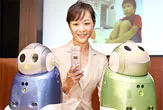
PaPeRo robot nanny is the latest in a series of robots for the home; NEC and telecommunications giant NTT came together to offer this one to a nation's children.
PaPeRo has a built-in mobile phone; parents can call it and order the 'bot to find the kids and play with them. Parents can also talk to children directly or with text messages via PaPeRo. "PaPeRo" is short for Partner-type Personal Robot; it uses a camera in each eye to navigate and has image recognition capabilities to track and identify individual children. The robot has a top speed of 20 centimeters per second, which designers (who apparently don't have toddlers themselves) believe is sufficient to keep up with children. Child-care robot specifications are certainly improving, but we are not yet up to the level of science-fictional robot care-givers. Philip K. Dick wrote about a robot named Nanny in a 1952 short story with the same name. Check the specs:
Nanny was built in the shape of a sphere, a large metal sphere, flattened on the bottom. Her surface had been sprayed with a dull green enamel, which had become chipped and gouged through wear. There was not much visible in addition to the eye stalks. The treads could not be seen. On each side of the hull was the outline of a door. From these the magnetic grapples came, when they were needed. The front of the hull came to a point, and there the metal was reinforced. The extra plates welded both fore and aft made her look almost like a weapon of war... (Read more about Philip K. Dick's Nanny robot)
See also Robot Nanny - The Fact, The Fiction; you might have fun with David Brin's fictional android Poppins or MIT's Huggable Robotic Companion Bear. Read more about how Childcare gets robotic from the source article. (This Science Fiction in the News story used with permission from Technovelgy.com - where science meets fiction.)
Get the world’s most fascinating discoveries delivered straight to your inbox.