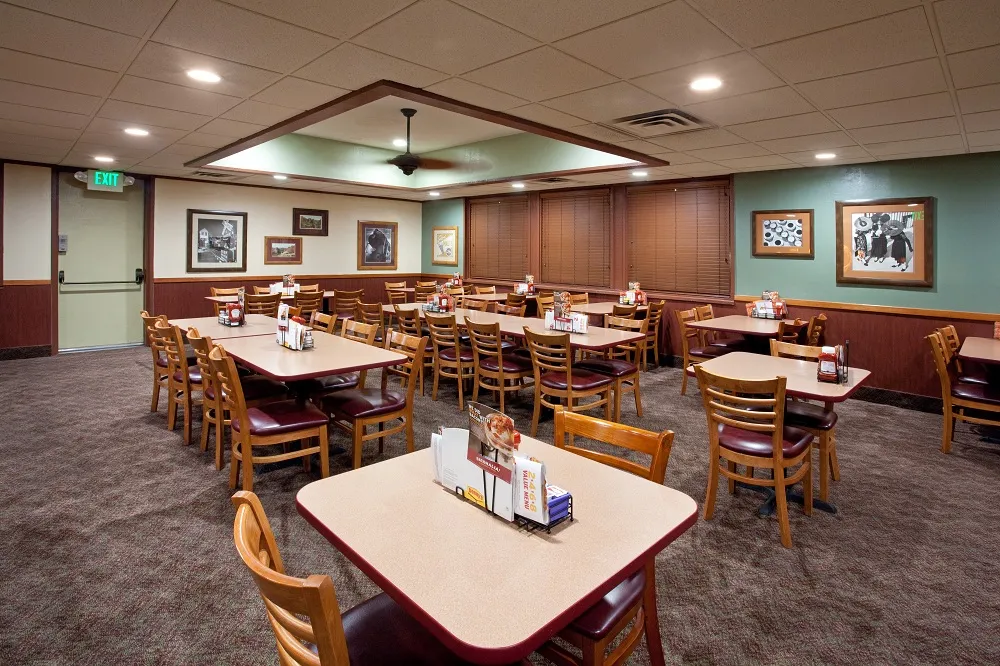
Cree LR6 LED downlights illuminate the dining room of a Denny's restaurant in Colorado Springs, Co. More than 400 LR6 downlights were installed in the dining rooms five area restaurants, cutting approximately $15,500 per year in energy costs
Noah Horowitz is a senior scientist and director of the Center for Energy Efficiency at the NRDC. This Op-Ed is adapted from a post to the NRDC blog Switchboard. He contributed this article to LiveScience'sExpert Voices: Op-Ed & Insights.
Six years ago, U.S. President George W. Bush signed a federal energy bill phasing out energy-wasting light bulbs on a staggered schedule to ensure a smooth and successful transition to more efficient bulbs — including more efficient incandescents — an effort that may ultimately save Americans $13 billion on their annual energy bills. All of the major lighting companies, including General Electric (GE), Philips and Sylvania, support the changes and have upgraded their supply chains to produce the energy-saving bulbs.
This LED bulb from Cree needs only 9.5 watts to produce the same amount of light as an old 60-watt bulb.
(Image credit: Cree, Inc.)
On Jan. 1, 2013, the next chapter began as the law came into effect for old, inefficient 40- and 60-watt bulbs, which represent over half the market — manufacturers can no longer produce or import those bulbs for markets in the United States.
This follows the recently completed transition away from the old 100- and 75-watt incandescent bulbs over the past two years, a process that unfolded smoothly because there are so many better-performing options available.
Consumers now have three major types of bulbs to choose from: new and improved incandescents that use 28-percent-less energy, compact fluorescent lamps (CFLs), and light-emitting diodes (LEDs) that provide energy savings of at least 75 percent over incandescents and last a lot longer. Some LED bulbs need only 9.5 watts to produce the same amount of light as an old 60-watt bulb.
Cree's CR6 LED Energy Star certified downlight powered by Cree TrueWhite technology.
(Image credit: Cree, Inc.)
In fact, in many ways these standards requiring improved efficiency have led to more lighting innovation over the past five years than we saw during the 100-plus years since Edison invented the light bulb!
To be clear, incandescents are not disappearing at the first of the year — they're just getting more efficient. And technological advances — like the GE 43-watt bulb below that replaces the 60-watt incandescent — have already saved homeowners and businesses billions of dollars on their energy bills. The new standards eventually will save as much electricity as is generated by 30 large coal-burning power plants — and the associated pollution that harms Americans' health and contributes to warming the planet — every single year.
Sign up for the Live Science daily newsletter now
Get the world’s most fascinating discoveries delivered straight to your inbox.
At the same time, the standards have created new jobs manufacturing efficient lighting in the United States, which helps boost our economy.
If you're a topical expert — researcher, business leader, author or innovator — and would like to contribute an op-ed piece, email us here.
Lumens, not watts
The new light bulbs use less power to give off the same amount of light. Therefore, consumers will no longer be buying bulbs simply based on their power, expressed in watts, and will shift toward buying bulbs based on their light output, expressed in lumens. In the near term, manufacturers are including claims like "replaces 60W bulb" or "13 W = 60 W" for a 13-watt CFL that gives off as much light as the old 60-watt incandescent bulb.
The chart from NRDC's light bulb buying guide provides an easy way for consumers to choose the bulb with the amount of light they are seeking. For example, the new incandescents, sometimes referred to as halogen incandescents, that replace the old 60-watt bulbs, only use 43 watts.
Bulb shopping tips
Some other things to know when shopping for a new light bulb:
Not all CFLs and LEDs are created equally. To ensure you are getting a good one, only buy those that have the ENERGY STAR® label. These not only save you energy but will also perform well over time.
CFLs last 10 times longer than incandescents, and LEDs last 25 times longer. Even though they might cost more to buy, they will save lots of money over their lifetime as well as prevent the need to replace each of your light bulbs every year.
Light bulbs come in different flavors. If you want the light to look just like it did with your old incandescent, buy one that says "warm white." Those that say "daylight" or "cool white" will have a much whiter, almost bluish, white light, which many consumers may not like.
If you want a dimmable bulb, buy an LED or incandescent bulb.
Bottom line, the nation's switch toward more efficient light bulbs is well under way, and the shift from the 40- and 60-watt bulbs should go without a hitch. The manufacturers and retailers have really stepped up to the plate and we now have a great energy-savings bulb on the shelf ready for every socket in your home.