













What a Dinosaur Brain May Have Looked Like

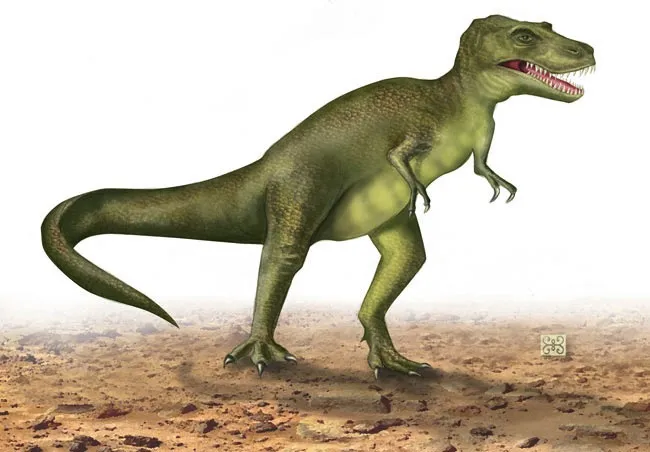
SAN DIEGO — Fossils have painted an often colorful and sometimes feathery picture of what dinosaurs looked like in their heyday, but almost nothing is known about the brains of man's favorite Jurassic beasts.
Drawing from the brain structures of crocodiles and birds, new research provides some clues about the structure of the dinosaur brain.
"No one has ever found a preserved dinosaur brain," said Erich Jarvis, a neurobiologist at Duke University in Durham, N.C., who presented the research with a colleague Tuesday (Nov. 12) here at the annual meeting of the Society for Neuroscience.
The only scraps of evidence available are fossilized molds of dinosaur brains, called endocasts — including one of Tyrannosaurus Rex. But endocasts don't accurately reflect the brain's internal structure. For that, Jarvis and his colleagues turned to the brains of dinosaurs' closest living relatives. [Gallery: Stunning Illustrations of Dinosaurs]
Birds evolved from a group of predatory dinosaurs, overwhelming evidence suggests. Until recently, scientists thought bird brains lacked a true cortex, the outer layer found in mammalian brains where complex cognition takes place. Then, in 2004, a new view emerged of the bird brain — one containing a cortex, or pallium, with distinct subregions. Jarvis and his team added to this new picture, showing that certain brain regions were mirror images of each other.
Meanwhile, the brain of the crocodile, which first emerged on Earth before dinosaurs, has remained essentially a black box, Jarvis said. He and his colleagues set out to fill in the gaps in science's knowledge of the crocodile's brain.
The researchers took fresh postmortem brains from American alligators (Alligator mississippiensis), which belong to the same group as crocodiles; sliced them like deli meat; and used a radioactive labeling method to measure which genes were active in the animals' brains. They compared the brains with those of zebra finches (Taeniopygia guttata), as well as turtles and lizards.
Get the world’s most fascinating discoveries delivered straight to your inbox.
The alligator brain proved to be about 85 percent similar to the bird brain, and contained six of seven major regions found in the bird brain. In birds, two of these regions are involved in vocal learning. And like bird brains, the alligator brains had genes that became active in response to sounds from other members of their species.
Based on the structure of bird brains and alligator brains, Jarvis' team infers that dinosaurs must have sported a similar brain with a cortex and six subdivisions, and with them, the capacity for sophisticated behavior.
"Dinosaurs may be underrated in complexity," Jarvis said.
Follow Tanya Lewis on Twitterand Google+. Follow us @livescience, Facebook & Google+. Original article on LiveScience.
