














DNA Sheds Light on Rare Killer Whale Type

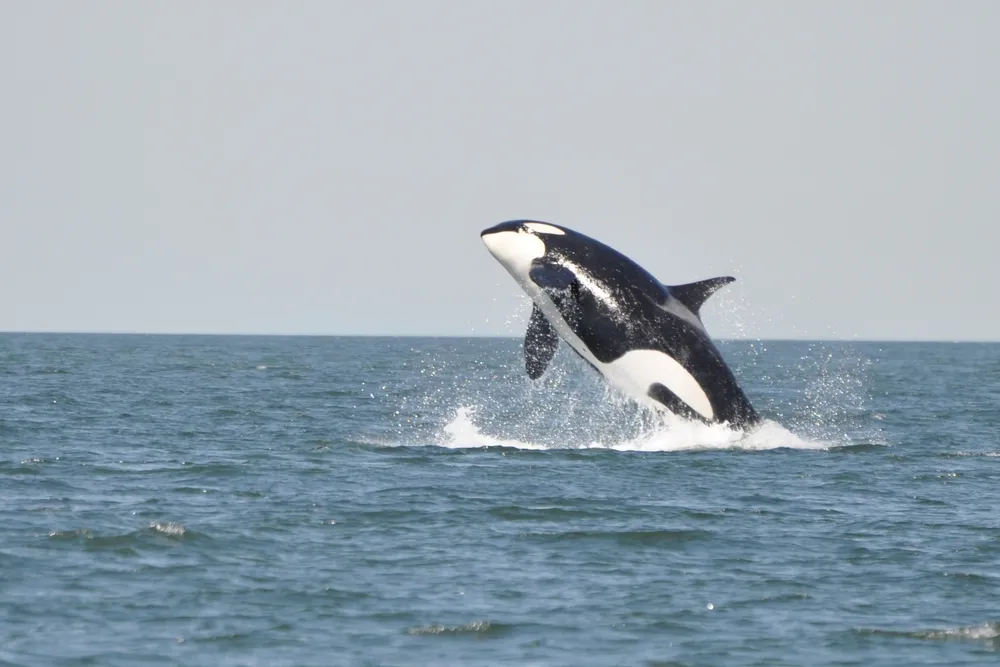
Scientists have long suspected that the killer whale, Orcinus orca, may actually be four different species or subspecies based of subtle differences in appearance and variations in behavior. The rarest of them all is known as type D. These fat-headed orcas, marked by tiny white patches around their eyes, were only recently observed in the wild, some 50 years after they were first identified in photographs from a mass stranding in New Zealand.
The skeleton of one of the type D whales that washed ashore in 1955 ended up at a museum in Wellington. In a new study, scientists analyzed DNA from the bones, showing, yes, type D is likely a distinct subspecies or species. The research, detailed in the journal Polar Biology, also suggests type D diverged from other killer whales about 390,000 years ago, making it the second oldest orca type.
Antiquated as some collections may seem, natural history specimens in museums have proved valuable to researchers studying otherwise hard-to-access genetic material. Scientists recently turned to a musty 100-year-old stuffed passenger pigeon, hoping to reconstruct the DNA of the extinct bird and eventually bring it back to life through cloning.
Follow Megan Gannon on Twitterand Google+. Follow us @livescience, Facebook & Google+. Original article on LiveScience.com.
Get the world’s most fascinating discoveries delivered straight to your inbox.
