













Battle of the Hurricane Sexes: Male vs. Female Storms
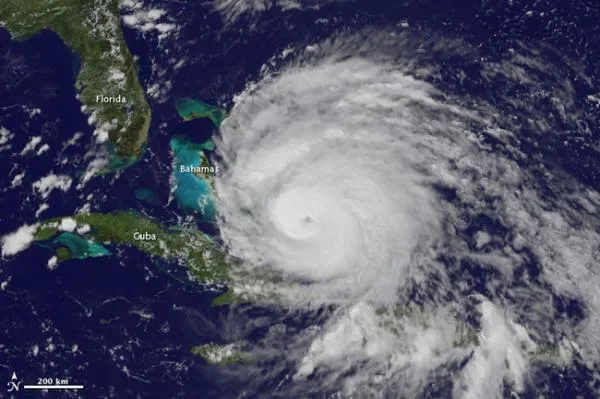
Sorry ladies, guys take this one: More of the deadliest, costliest hurricanes have been tagged with male names.
To keep things fair, we only included hurricanes since 1979, as all hurricanes were given female names between 1953 and that year. (Before 1953, latitude-longitude identification methods were used to tag hurricanes.)
And we only counted retired hurricane names, the storms that the World Meteorological Organization deemed so disastrous that the names should never be used again. There are six lists of hurricane names, with alternating male and female monikers — one year "A" is a male name, the next it's a female — that are recycled every six years. When a hurricane name becomes retired , it is replaced on the list with another name.
Comparing female and male names on the retired list reveals 29 retired male-named storms, compared with 22 female storms.
Retired male hurricane names:
1. David (1979)
2. Frederic (1979)
Get the world’s most fascinating discoveries delivered straight to your inbox.
3. Allen (1980)
4. Gilbert (1988)
5. Hugo (1989)
6. Klaus (1990)
7. Bob (1991)
8. Andrew (1992)
9. Luis (1995)
10. Cesar (1996)
11. Georges (1998)
12. Mitch (1998)
13. Floyd (1999)
14. Lenny (1999)
15. Keith (2000)
16. Isidore (2002)
17. Fabian (2003)
18. Juan (2003)
19. Charley (2004)
20. Ivan (2004)
21. Dennis (2005)
22. Stan (2005)
23. Dean (2007)
24. Felix (2007)
25. Noel (2007)
26. Gustav (2008)
27. Ike (2008)
28. Igor (2010)
29. Tomas (2010)
Retired female hurricane names:
1. Alicia (1983)
2. Elena (1985)
3. Gloria (1985)
4. Joan (1988)
5. Diana (1990)
6. Marilyn (1995)
7. Opal (1995)
8. Roxanne (1995)
9. Fran (1996)
10. Hortense (1996)
11. Allison (2001)
12. Iris (2001)
13. Michelle (2001)
14. Lili (2002)
15. Isabel (2003)
16. Frances (2004)
17. Jeanne (2004)
18. Katrina (2005)
19. Rita (2005)
20. Wilma (2005)
21. Paloma (2008)
22. Irene (2011)
Since 1953, the National Hurricane Center came up with lists of names for Atlantic tropical storms. An international committee of the World Meteorological Organization now maintains and updates these lists.
Such names serve more than fodder for pitting males and females against one another. Experience has shown that short, distinctive names are especially important in communicating detailed storm information in an efficient way, according to the National Hurricane Center.
Jeanna Bryner is managing editor of Scientific American. Previously she was editor in chief of Live Science and, prior to that, an editor at Scholastic's Science World magazine. Bryner has an English degree from Salisbury University, a master's degree in biogeochemistry and environmental sciences from the University of Maryland and a graduate science journalism degree from New York University. She has worked as a biologist in Florida, where she monitored wetlands and did field surveys for endangered species, including the gorgeous Florida Scrub Jay. She also received an ocean sciences journalism fellowship from the Woods Hole Oceanographic Institution. She is a firm believer that science is for everyone and that just about everything can be viewed through the lens of science.