













Soot-stained Snow Melts Sooner

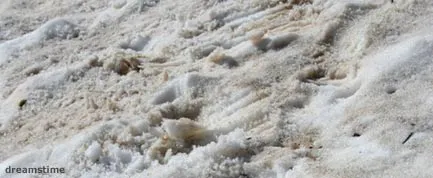
Soot-darkened snowdrifts aren't just unsightly; they also become warmer and thinner than pristine white snow, bumping up the start of the spring snowmelt by as much as a month, a new study finds.
Snowmelt is a critical part of the water supply in some regions, such as the western United States, and changes in its timing and amount can affect water availability. Scientists have charted the decline in snowpacks for decades. The Cascade Range, which runs from western Canada to northern California, has seen a 60 percent drop in its average snowpack in the last 50 years, said study co-author William Gustafson, of the U.S. Department of Energy's Pacific Northwest National Laboratory (PNNL).
But previous studies have only examined the role of rising temperatures fueled by greenhouse gases in driving snowmelt, because soot is harder to simulate on a global scale.
Scientists at the PNNL used a model to study the effect of soot on snow in the western U.S. mountain ranges, including the Rockies and Cascades, to see what impacts it would have on water supplies in the region.
"If we can project the future — how much water we'll be getting from rivers and when — then we can better plan for its many uses," said study team member Yun Qian.
The study, to be detailed in an upcoming issue of the Journal of Geophysical Research — Atmospheres, showed that soot — generated by the burning of fossil fuels in power plants and diesel engines — can warm up the snow and the air above it by up to 1.2 degrees Fahrenheit (0.7 degrees Celsius).
Soot darkens the snow, causing it to absorb more of the sun's rays; the added energy warms the snow up and causes it to melt, exposing some of the dark ground below. The resulting thinner snowpack reflects less sunlight back into the atmosphere than does clean white snow, further warming the area and perpetuating the cycle of snowmelt.
Get the world’s most fascinating discoveries delivered straight to your inbox.
The dirty snow ends up melting weeks earlier in the spring than pristine snow, which means less snowmelt water is available in the late spring and summer, creating the potential for regional water shortages.
Soot has been implicated in more rapid melting of Arctic ice, too.
- Video: Who Pays Most for Earth's Ills?
- Top 10 Surprising Results of Global Warming
- Soot Plays Big Role in Global Warming

Andrea Thompson is an associate editor at Scientific American, where she covers sustainability, energy and the environment. Prior to that, she was a senior writer covering climate science at Climate Central and a reporter and editor at Live Science, where she primarily covered Earth science and the environment. She holds a graduate degree in science health and environmental reporting from New York University, as well as a bachelor of science and and masters of science in atmospheric chemistry from the Georgia Institute of Technology.