Researchers from the Wildlife Conservation Society's Bronx Zoo flew south in June to the Bahamas' Inagua National Park, where they banded nearly 200 juvenile Caribbean flamingos to study their migration and movement patterns and identify the animals in the future. Here they head across the water to where the birds will be corralled and examined.
Band the birds
(Image credit: Julie Larsen Maher, WCS)
Researchers put bands like these ones on 200 birds to track their movement, in June 2012.
Pink and gray flamingos
(Image credit: Julie Larsen Maher, WCS)
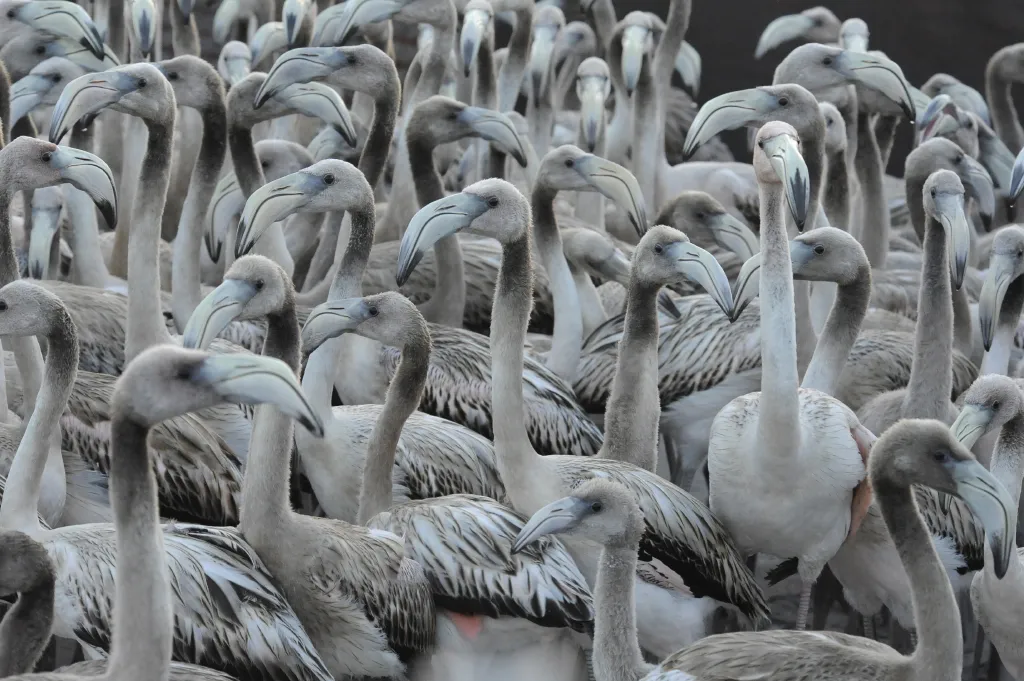
This colony of Caribbean flamingos includes birds ranging in age from adult to just weeks old. In contrast to the coral-colored adults, juveniles have white and gray feathers.
Juvenile flamingos get their characteristic pink feathers around one to three years of age. They are ready to breed at about age six.
Thattaway, birds!
(Image credit: Julie Larsen Maher, WCS)
Frank Espinoza, a flamingo researcher from Venezuela, herds a large group of birds toward the corral so they can be banded and examined.
Spread thy wings
(Image credit: Julie Larsen Maher, WCS)
Flamingos head across the lakebed toward the corral.
Flamingo Marching
(Image credit: Julie Larsen Maher, WCS)
The birds await the wildlife veterinarians in the corral.
Sign up for the Live Science daily newsletter now
Get the world’s most fascinating discoveries delivered straight to your inbox.
Bird physical
(Image credit: Julie Larsen Maher, WCS)
Neil McKinney, President of Bahamas National Trust, records data as WCS researcher Bonnie Raphael examines a young Caribbean flamingo. Dean Moberg, Animal Supervisor at Sea World Orlando, is holding the bird for the examination.
Fly away, young flamingo
(Image credit: Julie Larsen Maher, WCS)
Tim Mohl, Principal Keeper at WCS
A running start
(Image credit: Julie Larsen Maher, WCS)
A banded juvenile runs across the beach to rejoin the rest of the colony. Flamingos need to run a few steps into the wind to take off during flight.
Flamingo mounds
(Image credit: Julie Larsen Maher, WCS)
Flamingos create nest mounds to keep their eggs and offspring out of the water until they are ready to fledge.
For the science geek in everyone, Live Science offers a fascinating window into the natural and technological world, delivering comprehensive and compelling news and analysis on everything from dinosaur discoveries, archaeological finds and amazing animals to health, innovation and wearable technology. We aim to empower and inspire our readers with the tools needed to understand the world and appreciate its everyday awe.