














Huge Haboob Hits Lubbock, Texas

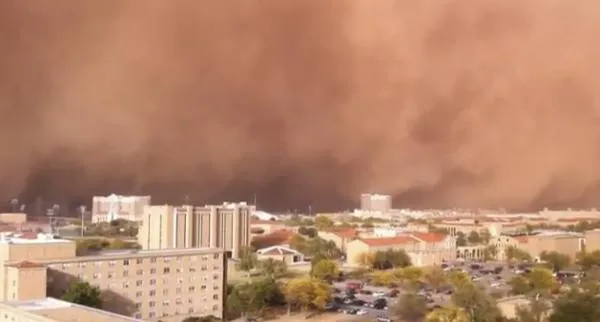
A giant dust storm known as a haboob swept through Lubbock, Texas, on Monday, blotting out the sun and turning everything a hazy copper.
The 8,000-foot-tall (2,400 meters) dust cloud knocked down trees and power lines, sparked small wildfires and damaged a hangar at the local airport, reported the Los Angeles Times.
Jerald Meadows, a meteorologist based in Lubbock, told the L.A. Times that smaller haboobs of around 1,000 feet (305 m) in height are fairly common in the area, but that yesterday's whopper was "fairly rare." He attributed the storm to the dry condition in the area, which have plagued most of Texas this year, and strong cold front with whipping winds that moved in from the Rockies. The storm traveled at an estimated 75 mph (120 kph).
Haboob is Arabic for "strong wind."
A haboob forms after a severe thunderstorm collapses. Rain-cooled air from the thunderstorm plummets to the ground at speeds up to 100 mph (161 kph), and with so much momentum that it can't go into the ground. Instead, the winds kick up an enormous amount of dry, loose sand, which ripples outward.
{youtube wfuDFEZYHTE}
Residents snapped image and took video showing the massive cloud bearing down on the city, and the local National Weather Service caught the signature of the storm on radar.
Get the world’s most fascinating discoveries delivered straight to your inbox.
This past summer, another huge haboob tore through Phoenix, Arizona . That cloud reached 5,000 feet (1,500 meters) in height and traveled about 50 mph (80 kph).
