














Emily Pounds Battered Haiti With Torrential Rains

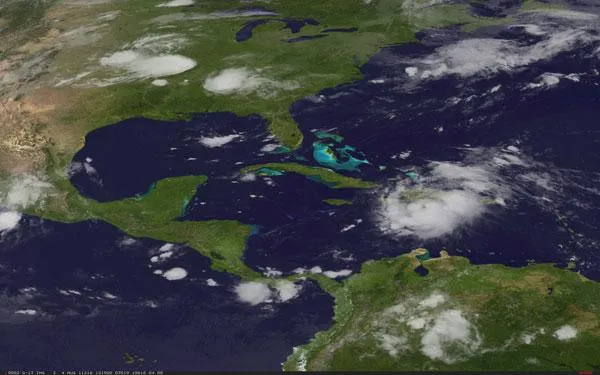
Tropical Storm Emily has been meandering to the south of the island of Hispaniola, shared by the Dominican Republic and Haiti, but is expected to cross over the island today, bringing torrential rains totaling up to 20 inches, according to the National Hurricane Center.
Emily has sustained winds of up to 50 mph (85 kph) and is expected to follow a west-northwest path across the southwestern-most peninsula of Haiti later today (Aug. 4).
As it crosses over the beleaguered country, still reeling from last year's devastating earthquake , Emily is expected to bring rains totaling between 6-12 inches (15-31 centimeters), with up to 20 inches (51 cm) possible in isolated pockets.
Such large amounts of rain falling in a relatively short amount of time can cause flash floods and trigger mudslides, a particular worry in Haiti where most of the land is deforested , making the soil more vulnerable to washing away.
The time it spends over the land and away from the warm, storm-fueling waters of the Caribbean could weaken Emily, but it is expected to re-strengthen when it passes over the Bahamas towards the weekend. Emily's current predicted path has it then skirting the eastern coast of Florida and the Southeast before then curling out into the Atlantic early next week.
There are some concerns that Emily's winds could jeopardize the planned launch of NASA's Juno mission to Jupiter from Cape Canaveral, Fla., if the initial launch on Friday is delayed.
Emily is the fifth named storm of the 2011 Atlantic hurricane season . Tropical storms and hurricanes receive names. So far this season, no hurricanes have formed, though seasonal predictions have between six to 10 hurricanes forming, with three to six major hurricanes (those with winds of up to 111 mph (179 kph) or higher) and 12 to 18 named storms.
Get the world’s most fascinating discoveries delivered straight to your inbox.
A hurricane has not made landfall in the United States since Hurricane Ike in September 2008.
