
















Tropical Storm Tasha Lashes Australia

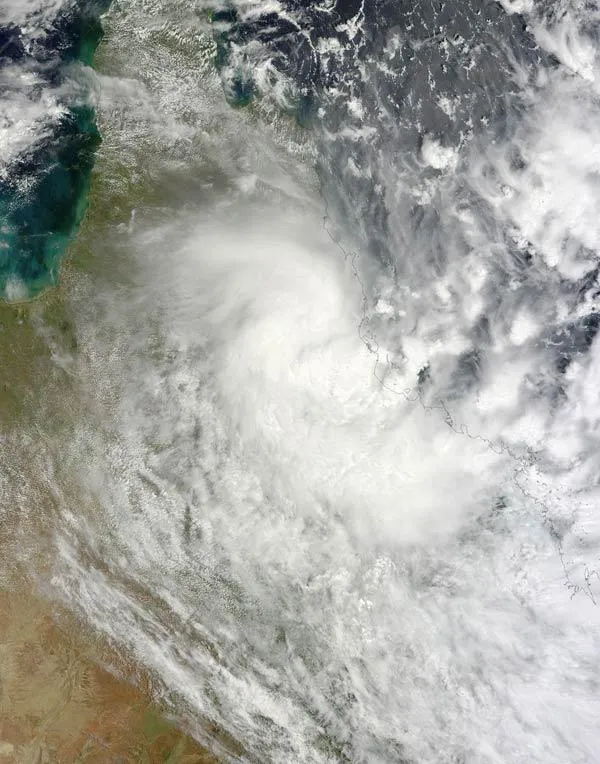
While the U.S. Northeast was getting socked by snow , the coast of Queensland, Australia, got a wet lashing from Tropical Storm Tasha for Christmas.
On Dec. 24, Tropical Storm Tasha formed quickly and headed for landfall near Cairns, Australia.
That same day, at 3:14 p.m. EST (6:14 a.m. local time on Dec. 25), the Australia Bureau of Meteorology issued a Severe Weather Warning, calling for "damaging winds, heavy rainfall and further flooding for people about the Queensland coast, ranges and adjacent inland areas between Cardwell and St Lawrence." In addition, a High Surf Warning was posted.
On Christmas Day, at 2 p.m. local time, NASA's Terra Satellite captured a visible image of Tropical Cyclone Tasha inland over northeastern Australia. The satellite image showed an area of very bright white clouds around the center of the storm indicating the highest, strongest thunderstorms within the tropical storm.
Tasha was generating rainfall at up to 2 inches (50 mm) per hour before it made landfall, according to NASA's TRMM satellite data. That heavy rainfall combined with another weather system that affected Queensland and created record flooding as Tasha made landfall and moved inland.
Get the world’s most fascinating discoveries delivered straight to your inbox.
