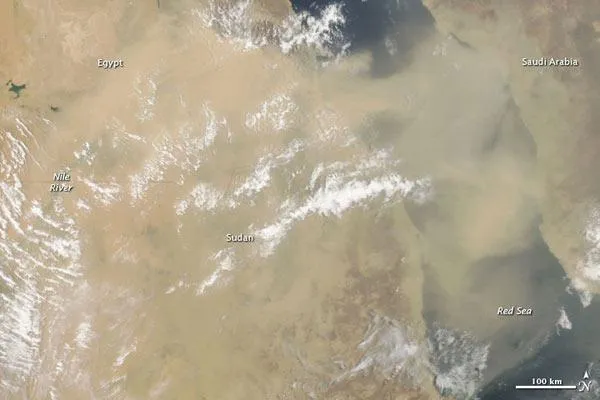
Intense Dust Storm Blows Over Egypt
Get the world’s most fascinating discoveries delivered straight to your inbox.
You are now subscribed
Your newsletter sign-up was successful
Want to add more newsletters?
Delivered Daily
Daily Newsletter
Sign up for the latest discoveries, groundbreaking research and fascinating breakthroughs that impact you and the wider world direct to your inbox.
Once a week
Life's Little Mysteries
Feed your curiosity with an exclusive mystery every week, solved with science and delivered direct to your inbox before it's seen anywhere else.
Once a week
How It Works
Sign up to our free science & technology newsletter for your weekly fix of fascinating articles, quick quizzes, amazing images, and more
Delivered daily
Space.com Newsletter
Breaking space news, the latest updates on rocket launches, skywatching events and more!
Once a month
Watch This Space
Sign up to our monthly entertainment newsletter to keep up with all our coverage of the latest sci-fi and space movies, tv shows, games and books.
Once a week
Night Sky This Week
Discover this week's must-see night sky events, moon phases, and stunning astrophotos. Sign up for our skywatching newsletter and explore the universe with us!
Join the club
Get full access to premium articles, exclusive features and a growing list of member rewards.
An intense dust storm blew over Sudan and Egypt on July 15, 2010, moving out over the Red Sea towards Saudi Arabia.
The storm was caught by NASA's Aqua satellite at 2:20 p.m. local time
Dust storms, also called sandstorms, arise when strong winds blows loose sand up from a dry surface; they are particularly common in arid regions of the world, in this case, the Sahara Desert.
Dust storms aren't just limited to the Sahara and the Middle East though, they can also happen in the western and plains regions of the United States. The years of drought during the Great Depression caused much of the topsoil in states like Kansas and Oklahoma to become dried out, and as a result huge dust storms blew through the region in the 1930s - the period is called the Dust Bowl for this reason.
Dust is known to lift off continents and migrate across oceans. Desert-dust storms whip up and disperse an estimated 2.4 billion tons of soil and dried sediment throughout the Earth's atmosphere annually, scientists estimate.
- The World's Weirdest Weather
- The Harshest Environments on Earth
- 101 Amazing Earth Facts
Get the world’s most fascinating discoveries delivered straight to your inbox.