














Some People Got Bird Flu Without Contact With Birds

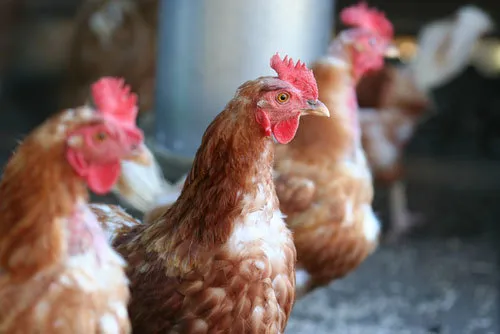
Health officials now know of 82 people who've fallen ill with the new H7N9 strain of bird flu in China, including 17 who died, according to the World Health Organization. That's 19 more cases and 3 more deaths since the count was updated yesterday.
WHO said today that some of the ill people have had no contact with poultry. The statement came after a Chinese scientist said that about 40 percent of infected people did not have contact with birds, according to Reuters.
It's still unclear how people are becoming infected.
The new strain, H7N9, is concerning because it has never before been seen in people, and so the general population presumably does not have immunity to it. So far, the virus does not appear to readily pass from person to person. WHO is monitoring more than 1,000 close contacts of those who fell ill and investigating the case of a few contacts who developed flu symptoms.
No vaccine is available, but recently, the U.S. Centers for Disease Control and Prevention announced it had started work on a vaccine in case it's needed.
Follow Rachael Rettner @RachaelRettner. Follow MyHealthNewsDaily @MyHealth_MHND, Facebook & Google+.
Get the world’s most fascinating discoveries delivered straight to your inbox.

Rachael is a Live Science contributor, and was a former channel editor and senior writer for Live Science between 2010 and 2022. She has a master's degree in journalism from New York University's Science, Health and Environmental Reporting Program. She also holds a B.S. in molecular biology and an M.S. in biology from the University of California, San Diego. Her work has appeared in Scienceline, The Washington Post and Scientific American.