













Northern Lights Dance in Spectacular Time-Lapse Videos

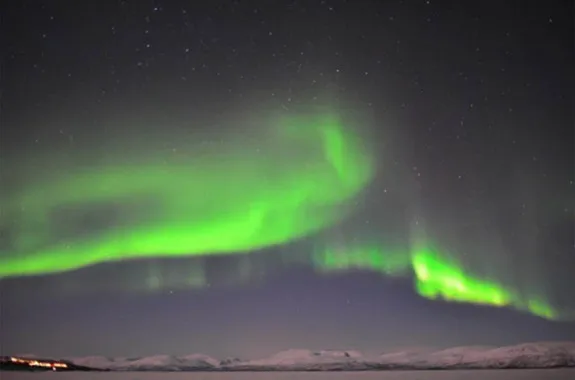
Jaw-dropping displays of the northern lights can be seen in a stunning series of time-lapse videos captured in Sweden this month by astrophotographer Chad Blakley.
Blakley has been filming in Sweden's Abisko National Park, which offers a view of glowing aurora borealis over snowy mountains. Swooshing and swirling green northern lights can be seen glimmering in a deep purple sky in the videos, which were shot over a 13-day stretch.
"We have seen powerful auroras in the sky above Abisko for 13 nights in a row and it looks like there are more to come!" said Blakley, who runs the site LightsOverLapland.com. "Last night I witnessed one of the finest aurora displays I have seen in many months."
Auroras are caused when charged particles from the sun are guided by Earth's magnetic field and slam into neutral particles in our planet's upper atmosphere. The magnetic field steers solar particles toward Earth's poles, so the northern and southern lights are best seen at high and low latitudes.
The aurora displays depend on weather conditions both on Earth and on the sun, where solar storms can send waves of charged particles our way. In the Northern Hemisphere, the cosmic light show is known as the aurora borealis. In the Southern Hemisphere, the phenomenon is dubbed the aurora australis.
Whatever the name, the aurora displays this month have been unforgettable, Blakley said.
"February 2013 is turning out to be one of the best months for aurora watching I have ever seen!" he added.
Get the world’s most fascinating discoveries delivered straight to your inbox.
Experts predict more and more stunning aurora shows as the sun ramps up toward a period of maximum activity this year, the peak of its 11-year cycle.
This story was provided by SPACE.com, a sister site to Live Science. Follow Clara Moskowitz on Twitter @ClaraMoskowitz or SPACE.com @Spacedotcom. We're also on Facebook & Google+.
