Fisheries Another Victim of Japan Tsunami

The devastating earthquake that ravaged Japan in 2011 may have also wreaked havoc on vital fisheries, researchers say.
The magnitude 9.0 Tohoku-Oki temblor in 2011 was the most powerful earthquake to hit Japan in recorded history, and set off a tsunami that lay waste to the country's northeastern coast, claiming the lives of nearly 19,000 people.
Past studies have analyzed the effects of tsunamis on marine ecosystems, for example investigating the effects the 2004 Indian Ocean tsunami had on coral reefs, seagrass beds and mangrove forests. A recent study also showed how the tsunami affected the seafloor by leaving behind huge, underwater dunes. However, until now, scientists had not looked into the effects of a major tsunami on fisheries, one of Japan's most important industries.
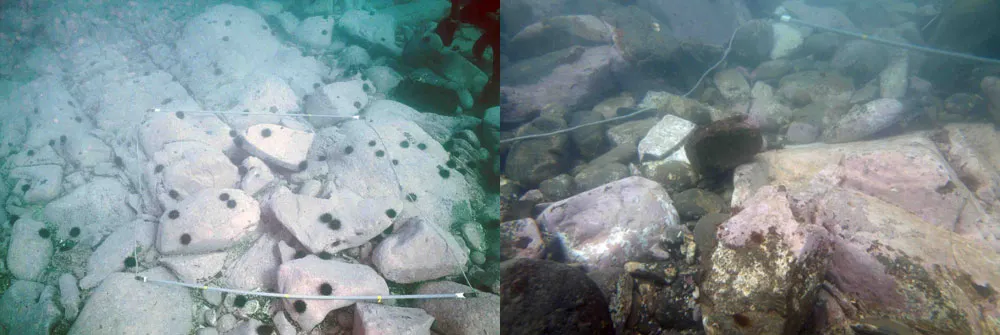
Since 2008, researchers had regularly surveyed fishery resources at the port of Tomarihama, the coastal area closest to the epicenter of the quake. To see what effects the tsunami had, scientists took a fisherman's boat to analyze this site via scuba diving three months after the catastrophe. Trees and structures up to 50 feet (15 meters) high on the area's coast were almost entirely destroyed by the disaster, suggesting the tsunami reached at least that height there. [In Pictures: Japan Earthquake & Tsunami]
"More than 90 percent of the boats around the survey point were swept away or destroyed by the tsunami, so it was difficult to rent a boat after the disaster," said researcher Hideki Takami, a marine biologist at the Tohoku National Fisheries Research Institute in Japan.
The scientists focused their survey on two types of marine life, abalone (Haliotis discus hannai) and sea urchin (Strongylocentrotus nudus). Both are valuable fisheries resources in Japan, and since they are common and abundant grazers there, both may exert strong influences on the marine ecosystems where they live.
The researchers found that levels of adult abalone dropped by more than half after the tsunami. In addition, "juvenile abalone and sea urchins largely decreased, to 14 and 5 percent of the densities just before the disaster, respectively," Takami told OurAmazingPlanet.
Get the world’s most fascinating discoveries delivered straight to your inbox.
Underwater visibility at the site was much lower than it was before the earthquake due to sediment in the ocean, even three months after the tsunami. The researchers suggest the great turbulence the tsunami caused washed away many of the animals in the ecosystem.
The researchers do note these findings are based on surveys conducted at just one site, "so the overall picture of effects of the earthquake and tsunami event on rocky shore ecosystems remains largely unknown," Takami said. Still, given the drop in juvenile abalone levels, "since the age at first capture of abalone is at four to five years old, "the future commercial catch may considerably decrease for at least four to five years after the event," he said.
Future research should continuously monitor the ocean ecosystems "to avoid collapse of these ecologically and economically important resources," Takami said.
Takami and his colleagues Nam-il Won and Tomohiko Kawamura will detail their findings in a future issue of the journal Fisheries Oceanography.
This story was provided by OurAmazingPlanet, a sister site to LiveScience.