














Weather Played Role in Pearl Harbor Attack
This article was provided by AccuWeather.com.
Today marks the 71st anniversary of the Japanese attack on Pearl Harbor, which led to America's involvement in World War II.
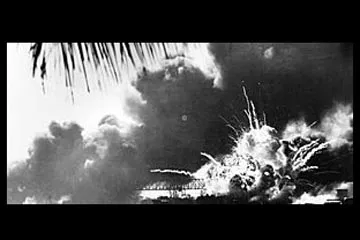
On the morning of Dec. 7, 1941, Japanese fighter planes attacked the American naval base at Pearl Harbor near Honolulu, Hawaii. Weather played a key role in the Japanese bombing of the U.S. naval base. Clear to partly cloudy skies allowed the Japanese to execute their plan with few problems.
AccuWeather.com Expert Senior Meteorologist Alex Sosnowski said the weather played a major role. "Unfortunately, conditions were pretty conducive for the Japanese to attack that day. With good visibility and only scattered to broken cloud cover, they had a relatively clear window for the attack."
The Japanese attack commander heard a Honolulu weather report stating "clouds mostly over the mountains. Visibility good," as the fleet neared Oahu, according to National Geographic. When the clouds broke, pilots reported seeing a "long white line of coast," referring to Oahu's Kakuku Point.
Former Director of History for the U.S. Naval Institute Paul Stillwell explained that the weather played an interesting part in the attack on Pearl Harbor. "Obviously the weather did not deter the Japanese attack. They crossed the North Pacific in rough seas, and had to refuel their ships from oilers on the way over. But as far as the weather for the attack, it was clear."
Stillwell also explained the biggest weather impact was actually indirectly beneficial for the U.S. "The USS Enterprise (CV-6) was coming back from Wake Island and was scheduled to arrive the morning of the 7th, but was delayed because of rough seas," he said. "The vessel was behind schedule returning to Pearl Harbor, and because of this was not present for the attack. The Enterprise played a substantial role throughout the remainder of the war, and had it been in port that day, things may have been very different."
Get the world’s most fascinating discoveries delivered straight to your inbox.
President Franklin D. Roosevelt delivered his famous speech on Dec. 8, 1941, about the horrifying attack on Pearl Harbor the previous day. In his speech he stated "that the attack was deliberately planned many days or even weeks" in advance.
Japanese spy Takeo Yoshikawa fed information about the naval base's ship movements, as well as weather conditions, back to enemy forces according to the U.S. Naval Institute. After deciding the highest number of ships would be in port on the morning of Dec. 7, Yoshikawa notified his commanding officers to move forward.
Former Navy Corpsman Milton Moyer recalled where he was when he heard the news. "I was at home in Gettysburg when we found out about the attack. We didn't have a radio at the time, but a friend of ours came by the house around 7 p.m. and told us."
Moyer stated the weather was fairly standard for that time of year. "There was nothing extraordinary about it, which made it even more strange. It was a day like any other day, yet we were under attack. It was just a typical December day for us, but then we were at war."
AccuWeather.com. All rights reserved. More from AccuWeather.com.
The only sure thing about weather forecasts is that they’re wildly different all over the planet. Test your knowledge on the wild ranges in temperature, precipitation and more.
Extreme Weather Facts: Quiz Yourself
