













Secret to the Spring in Your Step
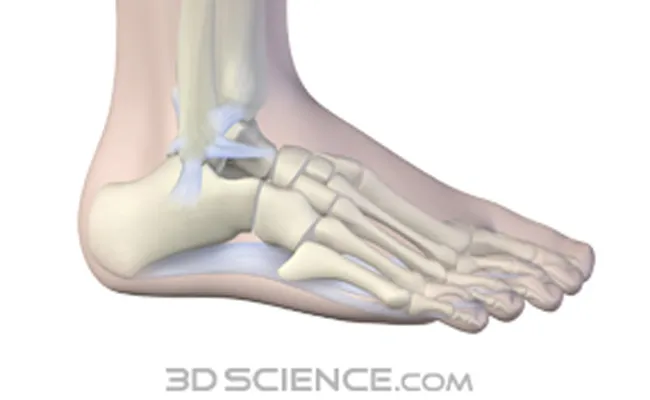
While happiness helps, the Achilles tendon is actually what puts more spring in your step.
The tendon — a stretchy tissue that connects muscles to bones — makes the ankle three times as efficient as muscles alone, two scientists now say.
"The muscle's teaming up with the tendon," researcher Greg Sawicki of Brown University told LiveScience. "You can use your tendon like a spring."
Sawicki is the lead author of the study published online April 18 in the Journal of Experimental Biology.
With the help of custom-made bionic boots of carbon fiber, Sawicki and his colleague Daniel Ferris discovered how much work the ankle does compared to how much energy it requires.
The boots are "essentially a robotic exoskeleton," said Ferris, who studies movement science at the University of Michigan-Ann Arbor. When the boots are turned on, the body’s own muscles power them via electrodes on the skin.
To calculate how much energy participants were using, the team measured how much oxygen subjects consumed with or without help from the boots.
Get the world’s most fascinating discoveries delivered straight to your inbox.
Ferris thinks better prosthetics are needed for amputees. Those like the controversial Cheetah, which are curved, blade-like prosthetics worn by the South African Paralympic runner Oscar Pistorius, are very efficient and effective for running, Ferris said. However, the energy a person puts in is not released at a useful time for walking.
- The Body Quiz
- Video: The Exercise Gene
- Video: Seeing Machine Helps Restore Eyesight