













Blue Iguana Slithers Back from Extinction

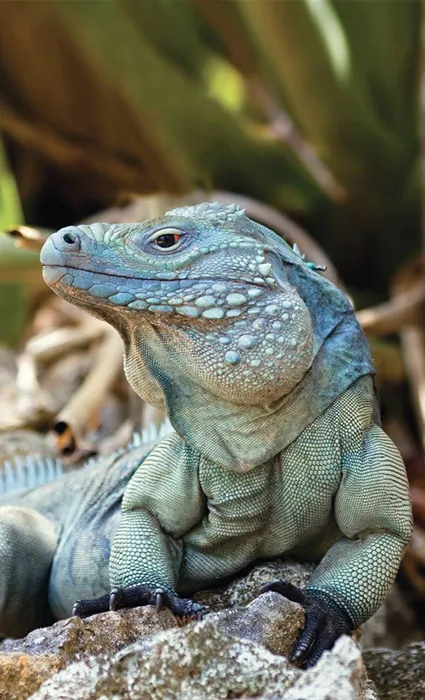
Just a decade ago, the Grand Cayman blue iguana was on the brink of extinction, with only 10 to 25 individuals left in the wild. But the reptile has made a major comeback and is no longer listed as a critically endangered species.
The blue iguana, which is only found on the Caribbean island Grand Cayman, now has a population of about 750 thanks to a recovery program. And over the weekend, the International Union for Conservation of Nature (IUCN) updated its listing of the species from critically endangered to endangered.
An endangered status is probably the best conservationists could ever hope for as far as the reptile is concerned, said Fred Burton, director of the Blue Iguana Recovery Program.
"Human impacts on Grand Cayman are now so extensive that there just isn't scope for these iguanas to regain numbers in the tens of thousands," Burton explained in a statement. "However, we are confident that we will achieve our lon-term goal of restoring at least 1,000 Grand Cayman blue iguanas to the wild."
The blue iguana is the largest native species on Grand Cayman. The reptiles often grow to more than 5 feet (1.5 meters) in length and weighs more than 25 pounds (11 kilograms). They once ranged over most of the island's coastal areas and interior dry shrub lands before habitat destruction, car-related deaths and free-roaming dogs and cats pushed them toward extinction.
The recovery program involves habitat protection, research, monitoring and releasing captive-bred iguanas into the wild.
Follow LiveScience on Twitter @livescience. We're also on Facebook & Google+.
Get the world’s most fascinating discoveries delivered straight to your inbox.
