Earliest Mammals May Have Been Egg-Layers After All

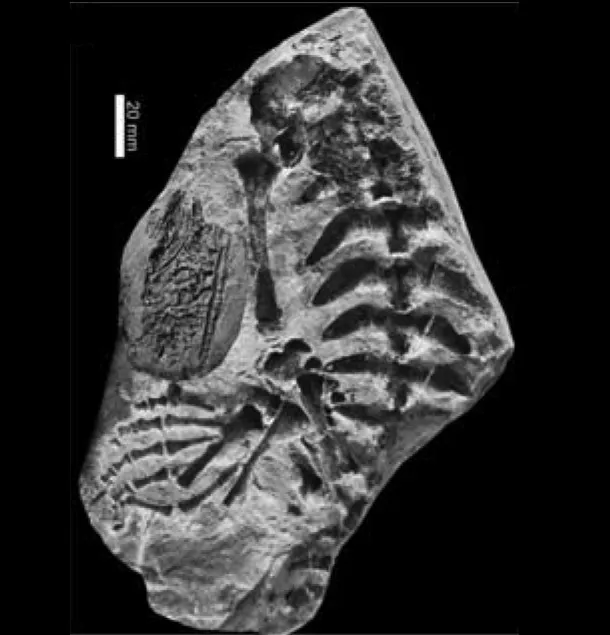
Despite evidence that the earliest examples of creatures such as mammals and reptiles gave birth to live young, they actually may have laid eggs, a scientist argues.
"These eggs are probably out there, but nobody has looked hard enough for them or they have not been recognized," says University of Bonn, Germany, paleobiologist P. Martin Sander, who details his analysis in the Aug. 17 issue of the journal Science.
Both mammals and reptiles envelop their developing embryos in protective layers, something that ultimately helped their ancestors conquer the land and that still helps their offspring survive. Mammals often keep these membrane-bundled offspring within them, giving birth to live young, while reptiles generally lay their membrane-swaddled progeny in eggs.
The fact that mammals and reptiles wrap their embryos within these defenses makes them known as amniotes, which first evolved about 310 million years ago. The fossil record of amniotic eggs and embryos is paltry, leaving scientists little knowledge about when, how and why they evolved.
Scientists have typically assumed that egg-laying emerged before live birth in amniotes, since earlier creatures such as amphibians and fish are typically egg-layers. However, the earliest direct evidence of reproduction in amniotes to date is dominated by specimens that gave birth to live young.
"There have been so many amazing discoveries of pregnant females in different marine reptile groups of the last decade," Sander told LiveScience. [Photos: World's Cutest Baby Animals]
For instance, scientists recently discoveredwhat appears to be a 280-million-year-old example of a pregnant female mesosaur, a group of the first aquatic reptiles. Another seemingly pregnant amniote is a 235-million-year-old specimen of an aquatic reptile known as Neusticosaurus.
Get the world’s most fascinating discoveries delivered straight to your inbox.
"There always has been the suggestion that small skeletons inside big skeletons are evidence of cannibalism," Sander said. "However, the more of these finds are made in different marine reptile groups, the clearer it becomes that the small ones are embryos, not last meals."
These findings might suggest that live-bearing preceded egg-laying in amniotes. However, the fact that all these pregnant reptile fossils come from ancient waters and not from dry land helps explain why they were all live-bearing rather than egg-laying, Sander said. Live birth makes sense for aquatic reptiles — if they laid eggs in the water, the embryos inside would drown.
Sander argues that egg-laying actually came first. He suggests that early leathery amniote eggs did not fossilize well. As such, evidence of egg-laying amniotes would be scarce at best, Sander said.
"There really should be a renewed effort to find older eggs of land-living animals than what we have now," he said.