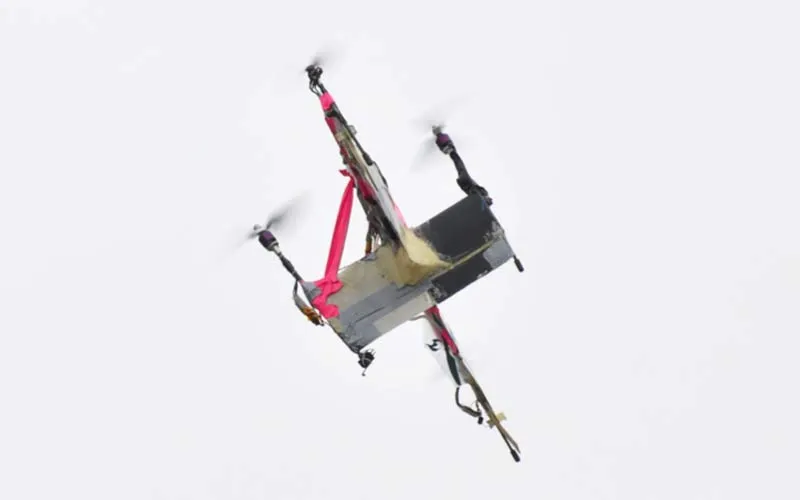
Flying robots sat out bad weather or found creative ways to crash in their failed mission to win the U.S. military's $100,000 prize for a homegrown drone.
The U.S. Defense Advanced Research Projects Agency (DARPA) launched its "UAVForge" competition as an experiment to see if the do-it-yourself spirit of the crowd could design, build and fly a backpack-size drone for scouting tomorrow's battlefields. DARPA wanted the drones to show that they could take off vertically, land on a structure for a "perch-and-stare" mission like overgrown robot insects, and nimbly dodge obstacles.
More than 140 teams and 3,500 individuals from around the world submitted drone designs online and voted for their favorite ideas. But none of the nine finalist teams that flew their robots at a "fly-off event" at Fort Stewart in Georgia ended up claiming the prize.
"The teams brought creativity and enthusiasm to the competition," said Jim McCormick, DARPA program manager. "The competition was more constructive than you might expect; there were many examples of teams helping each other."
U.S. troops have already deployed hand-launched Raven drones for scouting, and a few even have the backpack-size equivalent of suicide drones for diving at enemy targets like steerable missiles. But the DARPA effort was perhaps more about testing the effectiveness of a crowd-sourced solution by drone enthusiasts. [U.S. Army Orders First Suicide Drones]
The U.S. military's UAVForge competition featured plenty of homegrown drones, but none claimed the $100,000 prize.
(Image credit: DARPA)
Each of the DIY drones cost almost nothing compared to military drones with price tags in the millions of dollars — the DARPA competitors each spent anywhere from $2,000 to just under $10,000 to build their flying robots.
But the flight logs from the competition website also record the many problems teams encountered beyond taking off and flying to the mission's observation area. One suffered a crash and caught on fire, three crashed into trees, one ended up in a lake, and others suffered less dramatic crashes or hard landings.
Sign up for the Live Science daily newsletter now
Get the world’s most fascinating discoveries delivered straight to your inbox.
The failure of any team to complete the fly-off event mission means the U.S. military won't end up manufacturing any homemade design for additional testing. But at least the competition did not end up costing U.S. taxpayers dearly — the advantage of the prize competition approach that only pays big for success.
DARPA continues to shrewdly dangle prizes for other projects, such as a $2 million challenge for developing humanoid robots. The U.S. Air Force has also used prizes to attract solutions for such issues as stopping speeding cars without lethal force and making a 21st century battlefield stretcher.
Civilian U.S. government agencies have turned to prizes as well. NASA has launched plenty of its own competitions for space exploration, and the U.S. Department of Energy recently kicked off its $10 million prize to make solar panels as affordable as other power sources.
For the science geek in everyone, Live Science offers a fascinating window into the natural and technological world, delivering comprehensive and compelling news and analysis on everything from dinosaur discoveries, archaeological finds and amazing animals to health, innovation and wearable technology. We aim to empower and inspire our readers with the tools needed to understand the world and appreciate its everyday awe.