













Pentagon Floats Parachuting Robots for Disaster Relief

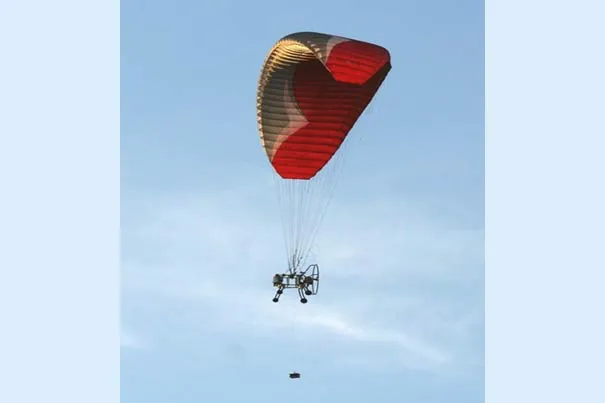
Tomorrow's disaster relief operations may feature parachuting robots and swimming tractors capable of delivering huge cargo containers to shore. Such technologies designed by the U.S. military could offload needed humanitarian supplies from cargo ships without nearby ports or specialized military ships.
Bringing supplies ashore in places without ports has presented a huge challenge for even military operations — the Allies built artificial harbors offshore to help offload supplies during the assault on Normandy in World War II. Today's similar problem facing disaster relief has inspired the U.S. Defense Advanced Research Projects Agency to design new solutions with a futuristic twist.
"To allow military ships and aircraft to focus on unique military missions they alone can fulfill, it makes sense to develop technologies to leverage standard commercial container ships, used around the world daily, as a surge capacity for extended humanitarian assistance and disaster relief operations," said Scott Littlefield, DARPA program manager.
The first solution resembles a propeller-driven flying robot that uses a parafoil-style parachute for lift. That drone would act as a flying crane of sorts to carry urgent supplies from a container ship to disaster-stricken areas on shore.
A second solution is a new amphibious vehicle capable of both swimming and driving on land — so-called Captive Air Amphibious Transporters. The vehicles have air-filled pontoons to float in the water as they swim to shore, so that their tanklike treads can drive right up onto the coast.
The third solution comes in the form of motion-stabilized cranes that can sit on cargo ships and transfer the containers from ship deck onto one of the amphibious vehicles. And the fourth solution is the design for container-size support modules to provide ready-made electrical power, water and other life support for an expanded crew aboard the container ships.
DARPA's Tactically Expandable Maritime Platform program has not been alone in considering the problem of offloading ships without ports — a former U.S. Marine has been working on the idea of using large balloons to support a robotic crane system system for offloading ships.
Get the world’s most fascinating discoveries delivered straight to your inbox.
The DARPA program has mostly wrapped up its investment, but the agency hopes its designs can prove useful for other branches of the U.S. military or government down the line.
This story was provided by InnovationNewsDaily, a sister site to LiveScience. Follow InnovationNewsDaily on Twitter @News_Innovation, or on Facebook.
