Lost Forest in Africa Yields New Species

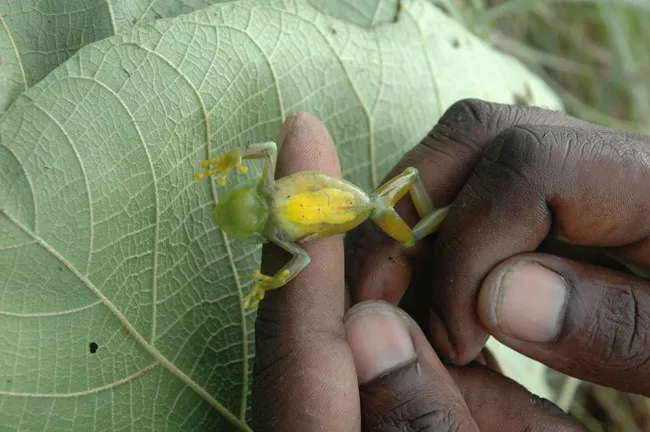
In a once-lost forest in Africa, six animal species new to science have been discovered, members of a two-month expedition now reveal, including a bat, a rodent, two shrews and two frogs.
"If we can find six new species in such a short period, it makes you wonder what else is out there," said Wildlife Conservation Society researcher Andrew Plumptre.
The bat appears to be a kind of horseshoe bat (genus Rhinolophus), known for the large horseshoe-shaped "nose leaves" used for directing their ultrasound.
These new species were discovered in an expedition from January and March 2007 into woods just west of Lake Tanganyika, which have been off limits to scientists for more than 50 years. The area is a remote corner of the eastern Democratic Republic of Congo, which has been gripped by unrest and war for decades.
Spirits linked with this area include Kabogo, said to occasionally manifest itself as a ghostly boat on Lake Tanganyika at night said to guarantee good fishing if seen, as well as Misotshi, who has taboos against the killing of chimpanzees and the destruction of the forest. For this reason, local chiefs suggested naming the area the Misotshi-Kabogo Forest, the researchers said.
The scientists found that nearly 386 square miles (1,000 square kilometers) of forest, almost the size of all of Hong Kong, remained intact. The woods stretched from the shores of Lake Tanganyika up to elevations of 8,940 feet (2,725 meters) above sea level, or roughly seven times the height of the Empire State Building.
These woods have been isolated from much of the Congo rainforest, the second largest rainforest in the world, for at least 10,000 years, which explains why they held new species, said Wildlife Conservation Society researcher Deo Kujirakwinja. They proved extraordinarily rich, providing a home to chimpanzees, elephants, leopards, monkeys, birds, reptiles, frogs and other amphibians, hogs, jackals, mongooses, porcupines, and antelopes known as bongos.
Get the world’s most fascinating discoveries delivered straight to your inbox.
The expedition collected additional material that may also yield a number of new plant species. Local botanists were unable to identify some 10 percent of the collected plants. Plumptre, Kujirakwinja and their colleagues will send these samples to specialists in the near future to assess their novelty.
The Wildlife Conservation Society notes that chiefs and elders at local villages are supportive of transforming the region into a protected park. Currently, human impacts on these forests are relatively low, with gold mining on a minor level being the most substantial threat.
- Gallery: New Amphibian Tree of Life
- Top 10 Species Success Stories
- All About Wildlife