













Baby Booms & Busts to Follow Hurricane Irene

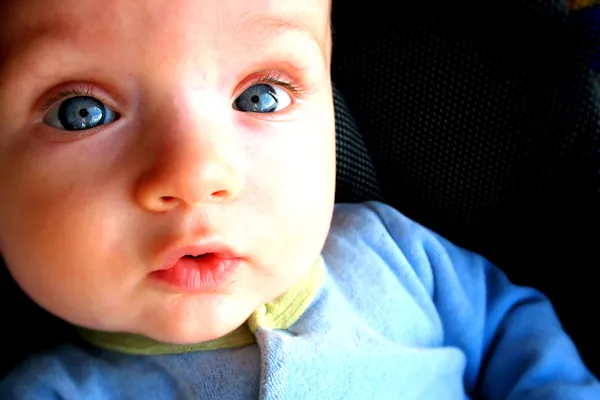
Even after everyone's lights turn back on, damaged property is fixed and local economies recover, Hurricane Irene will continue to make its presence known on the Eastern Seaboard. Scientists expect miniature baby booms and busts to sprinkle the coast next spring.
"I predict that New York City will have a baby boom nine months from now, and that [coastal] Virginia and North Carolina will have declines in birth," said economist Richard Evans of Brigham Young University. His prediction follows from a study published last year in the Journal of Population Economics, in which Evans and two colleagues identified a significant correlation between hurricanes and birth rates.
The researchers compared hurricane and tropical storm advisory data spanning the entire Gulf and East Coasts from 1995 to 2001 to the corresponding birth rates nine months later. Though not simple, the relationship they found was "very intuitive," Evans told Life's Little Mysteries, a sister site to LiveScience.
"For low-level advisories like tropical storm watches, there was a positive and significant fertility effect: A 24-hour-long tropical storm watch meant births nine months later were 2 percent higher," he said. "For severe storm advisories like hurricane warnings, you saw an almost equal and opposite decline in births nine months later." In both cases, the results were statistically significant.
They are also intuitive, Evans explained, because if you're just stuck in your house but not in grave danger, your sexual activity will likely go up. If you're running for your life, it won't. [Why Do We Have Sex?]
In the case of Hurricane Irene, most New Yorkers fell in the first category, and thus the region may experience a baby boom in May 2012. "New York was underwhelmed, so it was more of a 'hey, we're stuck in our house and there's no power,' situation," he said. Many Virginians and North Carolinians fell in the second category: They were boarding up their windows, loading up their cars and evacuating. No time for sex.
Popular wisdom has it that all natural disasters, such as earthquakes, as well as blackouts and catastrophes like the Sept. 11 terrorist attacks, impact fertility rates. Evans said this assumption can't be made on the basis of his study alone, which specifically addresses how storm advisories of varying severities impact sexual activity. In other situations, he said, "there are different channels at play, so you have to be careful applying these [findings] to other sorts of disasters." In fact, studies looking for a link between birth rates and catastrophes don't always find one.
Get the world’s most fascinating discoveries delivered straight to your inbox.
This article was provided by Life's Little Mysteries, a sister site to Live Science. Follow Life's Little Mysteries on Twitter @llmysteries, then join us on Facebook. Follow Natalie Wolchover on Twitter @nattyover.

Natalie Wolchover was a staff writer for Live Science from 2010 to 2012 and is currently a senior physics writer and editor for Quanta Magazine. She holds a bachelor's degree in physics from Tufts University and has studied physics at the University of California, Berkeley. Along with the staff of Quanta, Wolchover won the 2022 Pulitzer Prize for explanatory writing for her work on the building of the James Webb Space Telescope. Her work has also appeared in the The Best American Science and Nature Writing and The Best Writing on Mathematics, Nature, The New Yorker and Popular Science. She was the 2016 winner of the Evert Clark/Seth Payne Award, an annual prize for young science journalists, as well as the winner of the 2017 Science Communication Award for the American Institute of Physics.