













Frog Egg Cells Key Ingredient in Robotic Nose

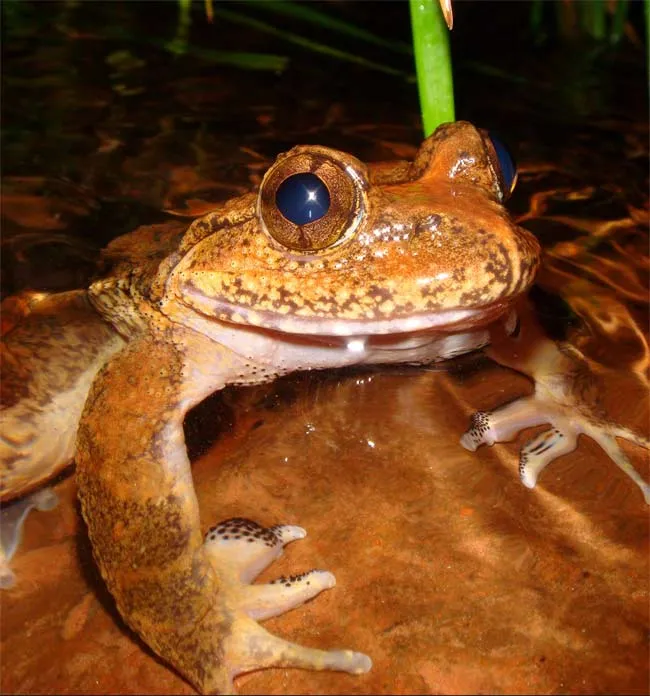
A chemical detector made from egg cells of the African clawed frog could give robots a new sense of smell.
About the size of a matchbook, the new device consists of two electrodes – strips of metal – and egg cells called oocytes (from the frog Xenopus laevis) covered with the equivalent of tiny insect "noses." When a chemical passes over the surface of the eggs, a specific electrical current is produced depending on the scent, creating a kind of fingerprint of the odorant.
This is not the first time frog eggs have been used to sniff out chemicals.
“People for many years, my lab especially, have been involved in work using Xenopus oocytes to express olfactory receptors,” said Laurence Zwiebel, professor at Vanderbilt University who was not involved in the study.
“It’s a very convenient system; it’s essentially a little factory cell that you can harvest very easily and make it work for you,” Zwiebel told TechNewsDaily.
However, the new study marks the first time frog eggs have been used in a robot, said Shoji Takeuchi, professor at the University of Tokyo and co-author of the study.
The new insect-sensor won’t be available commercially for about 15 years, Takeuchi said. However, the researchers hope to expand the sensor’s palette – enabling it to detect more odors, Takeuchi said.
Get the world’s most fascinating discoveries delivered straight to your inbox.
To turn these frog oocytes into odor-sniffing detectors, the researchers injected the frog cells with genetic material from the silkmoth, the diamondback moth and the fruit fly. The frog cells then used this genetic material (RNA) to express olfactory receptors of the insects – leaving behind a surface covered with smell detectors.
When odor molecules waft past the nose of an animal, including a human, olfactory receptors detect those molecules and send a "smell" message in the form of electrical signals to the brain. In this case, however, the signals are intercepted by the metal electrodes and passed along to a microprocessor. The result: A frog egg sensor that was able to distinguish between “nearly identical” chemicals.
Next, the team installed the new sensor into the head of a robot mannequin and connected it to an electric motor, which gave the head “nodding” ability. When the robot smelled a specific insect pheromone that was sent through tiny tubes to its nose, the robot would shake its head.
Today’s robots get their sense of smell from electronic gas detectors made from materials typically found in a computer. While these have been developed to respond to a range of chemicals, they don’t have the sensitivity found in nature.
Takeuchi and his colleagues detailed their findings online Aug. 23 in the Proceedings of the National Academy of Sciences.
