













Extinction Risk: Overfishing of ... Albatrosses

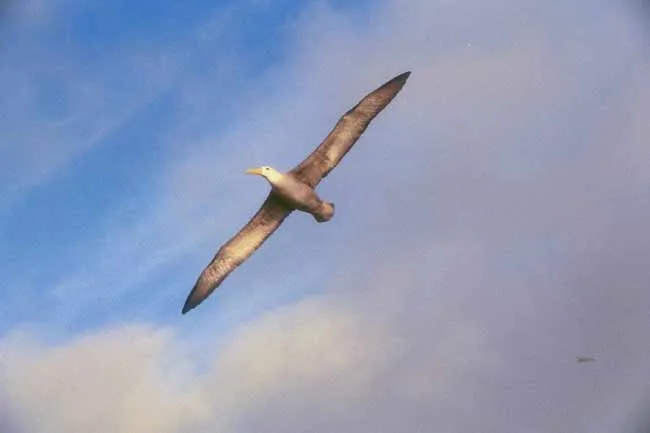
South American fishermen are making an unusual and potentially costly catch, but it's not some rare fish—it's a bird.
In just one year, fisherman caught and killed about 1 percent of the world's waved albatrosses, the largest bird in the famed Galapagos Islands, according to a study in the Sept. 26 issue of the journal Biological Conservation.
"If that happens every year, that is not sustainable," said Jill Awkerman, a Wake Forest University graduate student and lead author of the study. "In a matter of decades, you could be talking about extinction."
The researchers put identification bands on 2,550 albatrosses living on Española Island. In 2005, fisherman returned bands from 23 birds that had been killed, corresponding to a death rate of nearly one in every 100 birds.
While surveying Peruvian fishing communities where the albatrosses forage for food, observers found that some albatrosses accidentally became tangled in submerged gillnets. Instead of releasing the birds, many fishermen killed them for food. Some even intentionally caught the albatrosses on baited hooks.
The majority of the birds killed were males, which the researchers find troubling because the shortened life spans could limit successful breeding. Both parents take part in raising chicks, and an albatross pair must live several decades to raise even one offspring that outlives them.
"Fishing mortality could be partially responsible for an apparent decline in the breeding population," Awkerman said. "Our study puts together a frightening picture of what the potential for this species is."
Get the world’s most fascinating discoveries delivered straight to your inbox.
Collaborators in Peru have begun discussing the problem with local fishermen and government officials in Ecuador in Peru in hopes of putting a stop to the killings.
- Images: Endangered and Threatened Wildlife
- Images: Rare and Exotic Birds: The Best of Your Images
- Bird Extinctions More Rapid Than Thought
- All About Birds
