













Michigan Cougars Not Extinct, Animal Droppings Indicate

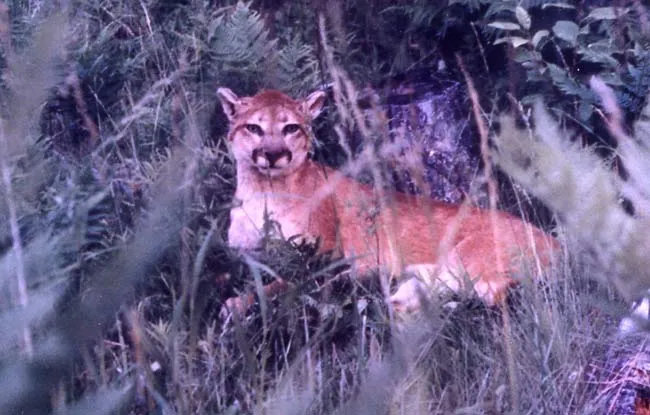
Cougars may be the most controversial of Michigan's 10 million-plus residents. While the state has a history of cougar sightings, whether any actually remain is a source of debate.
Wildlife officials have claimed that cougars were wiped out of Michigan by the 1930s. Yet people have reported mountain lion sightings in 12 areas of Michigan. Cougar and mountain lion are two names for the same animal.
Now a study of DNA from animal droppings may be the first concrete evidence that could lead to a resolution of the state's ongoing catfight.
Wild debate
The Michigan Department of Natural Resources (MDNR) recognized the possible presence of cougars by placing them on the state list of endangered species in 1987, but it has not acknowledged those thought to exist to be of wild origin.
“MDNR officials have often stated that any cougars actually seen must be escaped or released pets," said David Haywood, president of the Michigan Wildlife Conservancy.
The new study, detailed in the April issue of the American Midland Naturalist, involved analysis of droppings collected in the spring season of 2001, 2002 and 2003. The results for 10 droppings produced DNA profiles recognized as cougars, some of which are identified to be of non-pet origin.
Get the world’s most fascinating discoveries delivered straight to your inbox.
The DNA came from cells in feces that had originated in the digestive tracts of the animals.
Not pets
The most DNA information came from a Delta County animal and shows that the animal was a North American cougar, which means that the cat was not from a pet origin. (In addition, one sample was identified to be from a bobcat, and the other from a member of the dog family.)
If the cougar sample had proved to be from South America, then it would be considered of pet origin, because many of the cougars in captivity are from South America.
Based on the distance between the droppings, the researchers determined there were eight wild cougars in Michigan at the time of the study.
The suggestion that at least eight cougars were in the state during that time seem to cast doubt on the suggestion that all the animals were released pets, said study authors Brad Swanson, a geneticist at Central Michigan University, and Patrick Rusz, of the Michigan Wildlife Conservancy.
