













How Serious Is Angina?
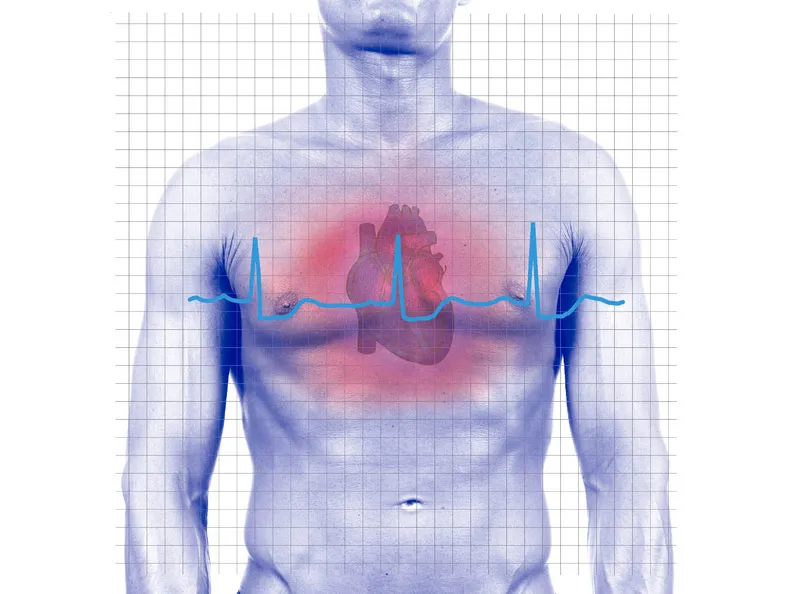
This Week’s Question: My understanding is that angina is not as serious as heart disease. Is this true?
Angina pectoris--or simply angina--is the medical term for chest pain or discomfort usually caused by coronary artery disease. Angina is a sign that someone is at increased risk of heart attack, cardiac arrest and sudden cardiac death. If you get angina, you should get medical attention immediately.
Angina (pronounced “an-JI-nuh” or “AN-juh-nuh”) hits when the heart doesn't get enough blood. This usually happens when there is a narrowing or blockage in one or more of the vessels that supply blood to the heart.
Angina can come from exertion. It may make you sweat or lose your breath. The pain can strike your arm or neck, too.
“Stable angina” comes on with exertion and then goes away easily. You can have this kind of angina for a long time.
When the pattern of angina changes a lot, it's called “unstable angina.” This is a danger sign. Unstable angina may be the first sign of a heart attack.
Then there is “variant angina pectoris” or “Prinzmetal's angina.” It usually occurs spontaneously and almost always occurs when a person is at rest. It doesn't follow physical exertion or emotional stress, either. Variant angina is caused by transient coronary artery spasm.
Get the world’s most fascinating discoveries delivered straight to your inbox.
Physicians have a variety of diagnostic tools.
An electrocardiogram (EKG or ECG) can tell a doctor if your heart has been damaged by a heart attack. If the EKG is done while you are having chest pain, it can also show if your angina is caused by a problem with your heart
A stress test is often done while you walk on a treadmill. Your doctor will look at your EKG to see if it's abnormal when you exercise. Your doctor may also have x-rays of the heart taken before and after you exercise. These pictures can show if an area of the heart is not getting enough blood during exercise.
A cardiac catheterization involves inserting a long, thin tube into an artery in the arm or leg and then guiding it into the heart. Dye is injected into the arteries around the heart. X-rays are taken. The x-rays will show it if any of the arteries that supply the heart are blocked.
Most people diagnosed with heart disease have to take medicine. Medicines called beta blockers, calcium channel blockers and nitrates can help relieve angina.
There are surgical options.
Angioplasty uses a tiny balloon to push open blocked arteries around the heart. The balloon is inserted in an artery in the arm or leg. A stent (a small tube) might be put into the artery where the blockage was to hold the artery open.
In bypass surgery, the surgeon takes pieces of veins or arteries from the legs and sews them into the arteries of the heart to bring blood past a blockage and increase the blood flow to the heart.
- Top 10 Amazing Facts About Your Heart
- Does the Heart Ever Skip a Beat?
- Hearts Shrink With Age
The Healthy Geezer column publishes each Wednesday on LiveScience. If you would like to ask a question, please write [email protected]. © 2009 by Fred Cicetti.