













Study: Lyme Disease Was Imported
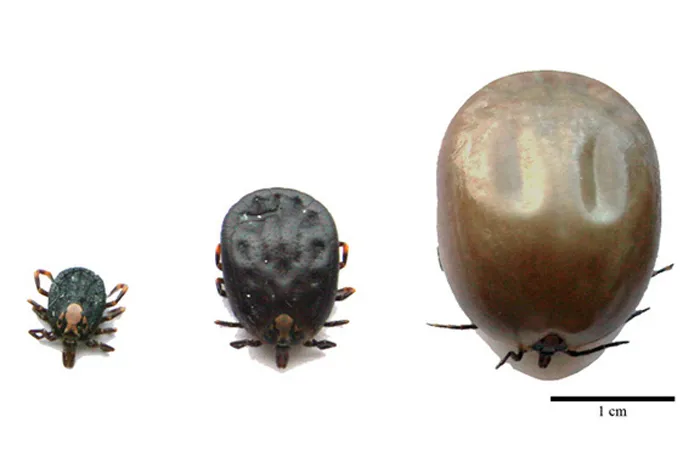
Lyme disease entered American consciousness in 1975, when a cluster of cases turned up around Old Lyme, Connecticut. Thirty-plus years later, it's still on the rise in the United States.
New research shows that the pathogen responsible for the ailment, which produces arthritis and neurological symptoms, originated overseas, millennia ago.
Lyme disease is caused by the spirochete bacteria Borrelia burgdorferi, which live in small and medium-size mammals and are transmitted to humans via tick bites . Little known stateside is that it's the most common tick-borne disease in Europe, as it is in the U.S.; two other species of Borrelia are implicated there, though, along with B. burgdorferi.
To probe the U.S. pathogen's origins, Gabriele Margos of the University of Bath in England and sixteen colleagues compared DNA samples from B. burgdorferi collected across the U.S. and Europe. Contrary to earlier studies that located our B. burgdorferi's origins in the New World, the research concluded that the pathogen originally came from Europe. The team studied eight "housekeeping" genes, which are involved in cell maintenance and evolve slowly. As such, their variation is thought to yield more reliable insights than that of less conservative genes studied by others.
The team thinks the pathogen has resided quietly in North America for millions of years, only recently coming into sufficient contact with humans to warrant the medical community's attention. (PNAS)
Get the world’s most fascinating discoveries delivered straight to your inbox.