













'Grrrr' Means Many Things in Dog Speak

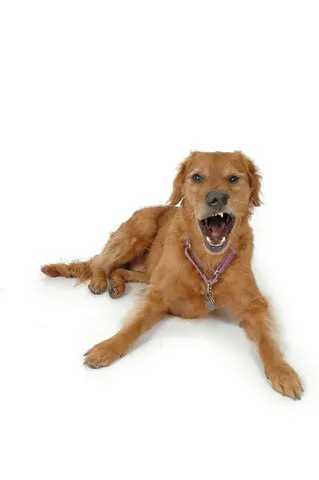
In dog-speak, "grrrr" can mean different things. Dogs have special growls for different occasions, and other dogs can tell the difference, a new study finds.
For example, when a dog growls while playing, it sounds different than the same dog's growl while reacting to a threatening stranger or guarding food. And when scientists recorded these sounds and played them to other dogs, those dogs reacted differently based on which recording they heard.
"What is I think really interesting in this result was that we could find some kind of proof that dogs can understand from another dog's vocalization something about the context," said researcher Peter Pongracz of Eotvos Lorand University in Hungary.
This skill has been hinted at in a few other species, such as monkeys and squirrels, but is largely unproven in the animal world. And it is a new result for dogs.
"We've researched a lot about how dogs communicate with humans, and how humans communicate with dogs, but how dogs communicate within the species is fairly new," Pongracz told LiveScience.
The scientists recorded growls from 20 adult dogs in the three different situations. During the playful situation, the dog and its owner played tug of war. In another situation, the dog was kept on a leash and given a large, meaty bone. Then the researchers had another dog try to snag the bone, triggering the meat owner to react with a "guard" growl. (Both dogs were held on leashes by their owners, and no dogs were hurt). Finally, the owner stood behind the dog and held its leash while a 25-year-old male stranger approached slowly and silently, continually staring at the dog. This prompted a threatening growl from many of the dogs.
The researchers, led by Tamas Farago of Eotvos Lorand University, measured various features of the dog growls, such as how long the growls lasted, their fundamental frequency (pitch), and a parameter called formant dispersion, an estimator of vocal tract length.
Get the world’s most fascinating discoveries delivered straight to your inbox.
"There was a clear significant difference between the play growl and the two others, which we call agonistic," Pongracz said. The play growls were much shorter in length, as well as higher pitched, he said. "But what is interesting is at this point we could not find a significant acoustic difference between the two agonistic growls."
Even though the humans and their scientific equipment couldn't tell the difference, though, it seemed the dogs could.
When the scientists played recordings of the growls to other dogs to see if they reacted differently, they found that the food-guarding growl was much more effective than the other two growls at deterring other dogs who contemplated stealing an unattended bone.
The researchers detailed their findings in the April issue of the journal Animal Behavior.
