













Boys Last: Birds Control Birth Order

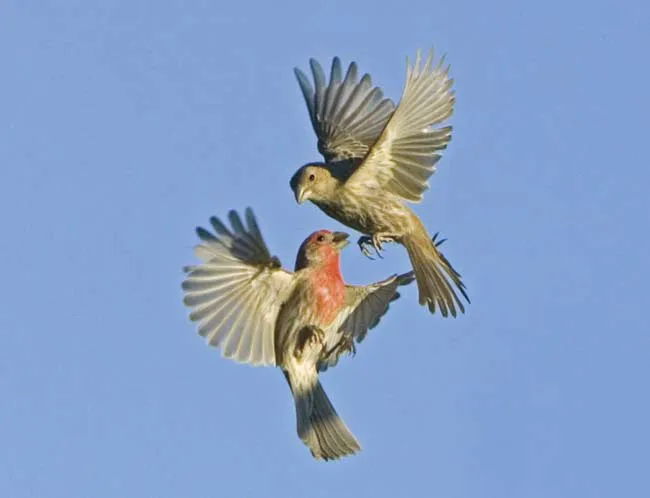
Like any protective mother, female house finches try to keep their chicks away from unwanted pests. But they favor their more vulnerable sons over their sturdier daughters, according to a new study.
Blood-sucking mites can infest a finch's nest, jeopardizing the chicks' chances of surviving long enough to leave home. And, "sons are more sensitive to the mites than daughters," said Alexander Badyaev of the University of Arizona.
When breeding female finches are exposed to the mites, their bodies make hormonal changes that help out their more susceptible sons. When a female finch lays eggs, she lays only one per day. The hormone shifts in her body change the order in which eggs are laid—girls first, boys last—and make the male chicks grow faster while they're still in the egg.
"Mothers essentially hid their sons in the eggs," Badyaev said.
Because they have less exposure to the mites, the male chicks born during mite season can grow up just as big and strong as those born during mite-free months, even though they spend less time in the nest, the study concluded.
The research was published last week in the early online edition of Proceedings of the National Academy of Sciences.
- Images: Birds of Prey
- Images: Rare and Exotic Birds
- Mama’s Boys Get Better Milk
- Clean Bees Keep Mites Away
- All About Birds
Get the world’s most fascinating discoveries delivered straight to your inbox.
