Live Science Plus





You are now subscribed
Your newsletter sign-up was successful
Want to add more newsletters?

Delivered Daily
Daily Newsletter
Sign up for the latest discoveries, groundbreaking research and fascinating breakthroughs that impact you and the wider world direct to your inbox.

Once a week
Life's Little Mysteries
Feed your curiosity with an exclusive mystery every week, solved with science and delivered direct to your inbox before it's seen anywhere else.

Once a week
How It Works
Sign up to our free science & technology newsletter for your weekly fix of fascinating articles, quick quizzes, amazing images, and more

Delivered daily
Space.com Newsletter
Breaking space news, the latest updates on rocket launches, skywatching events and more!

Once a month
Watch This Space
Sign up to our monthly entertainment newsletter to keep up with all our coverage of the latest sci-fi and space movies, tv shows, games and books.

Once a week
Night Sky This Week
Discover this week's must-see night sky events, moon phases, and stunning astrophotos. Sign up for our skywatching newsletter and explore the universe with us!
Join the club
Get full access to premium articles, exclusive features and a growing list of member rewards.
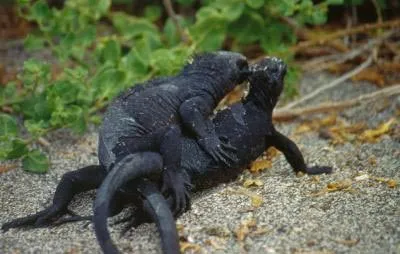
Decisions, decisions. Picking a mate from a long line of suitors is an exhausting process for a female iguana. In fact, it can really kill her.
Scientists have generally assumed that being choosy about a mate carried a low cost for female animals, particularly when those males roam territories that are tightly clustered into groups called leks, because the females don’t have to travel very far to check out their prospects.
But the female Galápagos marine iguana spends a lot of energy choosing her mate, even though all she seems to get from the effort is better genetic material for her young. And visiting the more “attractive” males that provide this high-quality DNA (those that display more often) carries the highest costs in energy for the female because she can lose more weight and therefore produces smaller eggs.
Low body weight can decrease the female’s chances of survival. During El Niño years, marine iguanas have a hard time finding food, so those who start at a low weight are less likely to survive the season.
Further research is needed to determine whether the genetic material the female gets outweighs the costs she pays for finding Mr. Right.
The new study is detailed in the June 27 issue of the online journal PLoS ONE.
- Amazing Animal Abilities
- Men Pay the Ultimate Price to Attract Women
- Mating Game: The Really Wild Kingdom