













Labord's chameleon: The color-changing lizard that drops dead in 4 months
Labord's chameleons are only found in Western Madagascar and have developed a live fast die young life cycle to cope with the extreme environmental conditions.


Name: Labord's chameleon (Furcifer labordi)
Where it lives: Western Madagascar
What it eats: Crickets, flies, locusts, grasshoppers and stick insects
Why it's awesome: Labord's chameleons live fast and die young. They hold the record for the shortest lifespan of all tetrapods — they hatch, grow, mate and die in just four to five months.
Labord's chameleons actually spend more time developing inside their eggs than they do outside of them. For around eight to nine months, the embryos rest beneath the forest floor, preparing for their whirlwind time above ground.
These short-lived chameleons grow to around 3.5 inches (9 centimeters) long and are found exclusively in forests in the lowlands of western Madagascar.
Once they hatch, they grow quickly and reach sexual maturity at 2 months old.
Get the world’s most fascinating discoveries delivered straight to your inbox.
Their aggressive mating season begins in January, during the wet season, with males battling fiercely for the chance at reproducing then dying shortly after.
Females then put all their energy into producing eggs, which they lay in February. They have a relatively high reproductive rate to compensate for their short adult lifespan, with each female laying up to 11 eggs. Hours after laying their eggs, the females die.
This means that for two-thirds of the year, the entire species exists in eggs buried underground.
This unusual — and seemingly risky — lifecycle is thought to be a survival adaptation to the harsh seasonal environment of western Madagascar. The region experiences distinct wet and dry seasons, with the rainy season providing the necessary resources for survival, such as food and water, while these become more scarce in the dry season. Although many tropical regions experience wet and dry seasons, the climate of Madagascar is extremely variable and environmental unpredictability is much greater than other tropical areas.
To align with these conditions, the chameleons have evolved to spend most of the year as embryos in their eggs — emerging during the brief rainy season to mate and lay more eggs.
By compressing their entire adult existence into the wet season, the chameleons maximize their chances of finding food and mates. This strategy also reduces competition for resources, as most adults die before the next generation hatches (although during unusually long rainy seasons, females can survive for a second breeding season).
RELATED STORIES
Chameleons are known for their ability to change color, and Labord's chameleons are no different. Their skin changes color by expanding and contracting special cells that contain nanocrystals, which alters how they reflect light. But they don't do it to camouflage themselves. Instead, they use it to communicate with other chameleons — for example, to attract mates — and in response to emotions.
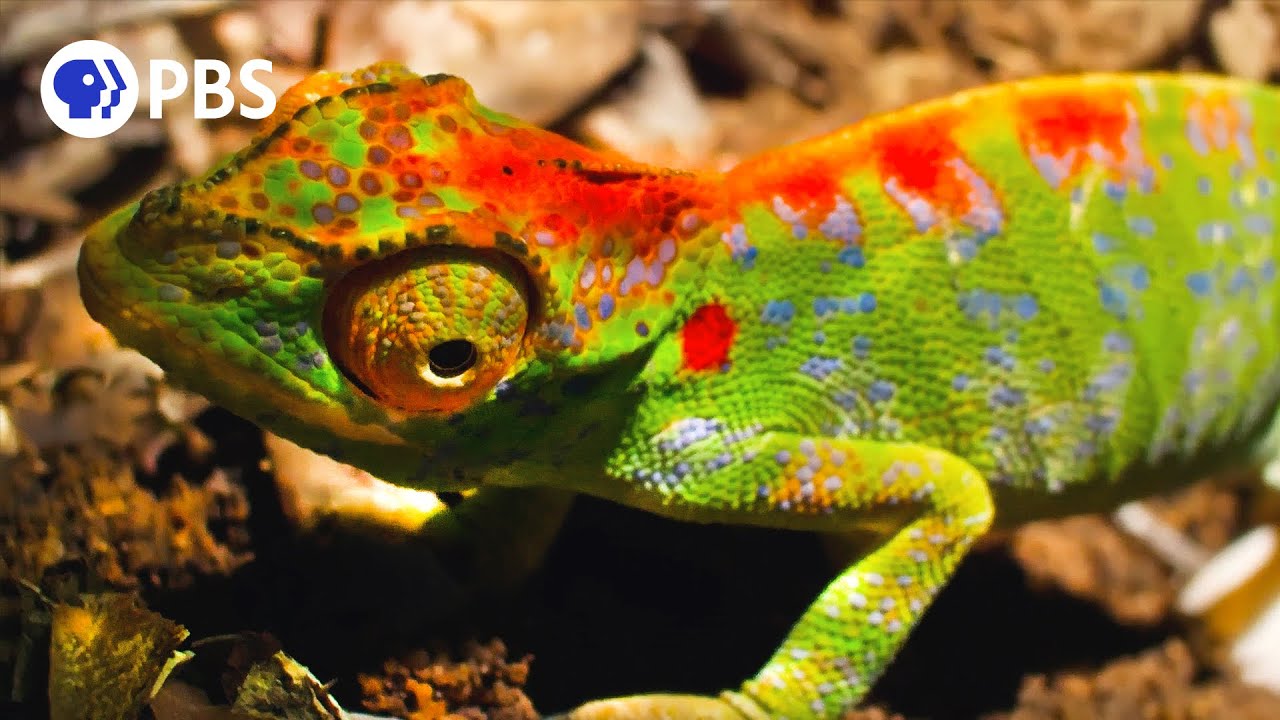
In a 2024 PBS documentary filmed in the Kirindy Forest in western Madagascar, a Labord's chameleon broke into a vibrant, pulsating display of color just moments before its death. This is the result of the nervous systems continuing to send signals to skin cells, resulting in a dramatic "technicolor fireworks display," according to the experts in the documentary.

Lydia Smith is a health and science journalist who works for U.K. and U.S. publications. She is studying for an MSc in psychology at the University of Glasgow and has an MA in English literature from King's College London.
You must confirm your public display name before commenting
Please logout and then login again, you will then be prompted to enter your display name.