














Does LSD 'Microdosing' Really Work? Study Aims to Find Out

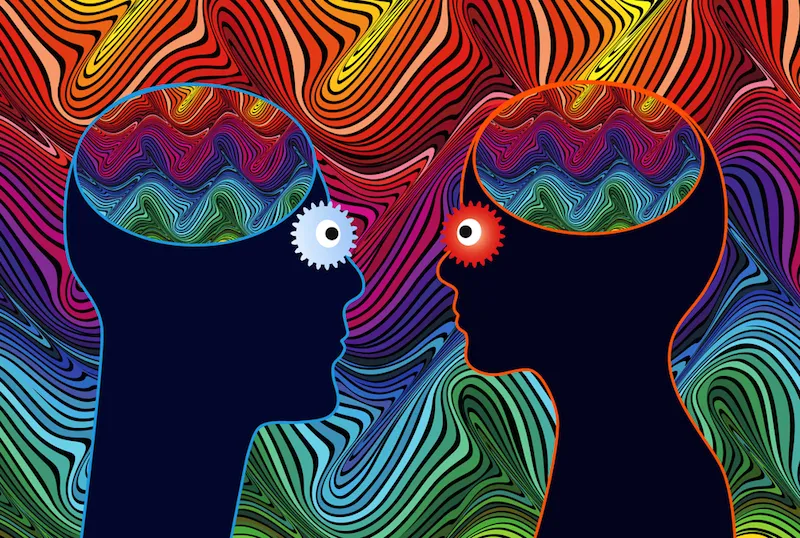
Microdosing, or taking tiny doses of psychedelic drugs, is rising in popularity, with users saying it boosts their mood, focus and productivity. But there's been little scientific study of the practice — until now.
Researchers in the United Kingdom say they plan to conduct the first rigorous scientific study on the effectiveness of microdosing.
The study will enroll 20 participants, who will receive either a microdose of LSD — about one tenth of a recreational dose — or a placebo, before they are asked to perform various tasks. Some of these tasks will include measures of creativity, alertness and mood. Participants will also play the ancient Chinese game of Go, which involves pattern recognition. In addition, participants will have their brains scanned so researchers can compare the neural effect of a microdose with that seen in people who take a standard recreational dose. [Trippy Tales: The History of 8 Hallucinogens]
The study will be "double blind" meaning participants won't know whether they're getting LSD or the placebo.
The study will be led by Amanda Feilding of the Beckley Foundation, an organization that researches psychedelic drugs in order to spur changes in drug policies that are based on scientific evidence.
"For decades, we have seen anecdotal evidence that microdosing improves mood and well-being, enhances cognition, increases productivity, and boosts creativity," Feilding said in a statement. "Now we have the opportunity to undertake the first controlled scientific investigation…into the effects of microdosing LSD, thereby finally establishing whether the claims about its benefits are true."
The researchers are raising money for this study, and other studies on psychedelic drugs, through a crowdfunding campaign launched today (May 9).
Get the world’s most fascinating discoveries delivered straight to your inbox.
Original article on Live Science.

Rachael is a Live Science contributor, and was a former channel editor and senior writer for Live Science between 2010 and 2022. She has a master's degree in journalism from New York University's Science, Health and Environmental Reporting Program. She also holds a B.S. in molecular biology and an M.S. in biology from the University of California, San Diego. Her work has appeared in Scienceline, The Washington Post and Scientific American.