 Live Science Plus





You are now subscribed
Your newsletter sign-up was successful
Want to add more newsletters?

Delivered Daily
Daily Newsletter
Sign up for the latest discoveries, groundbreaking research and fascinating breakthroughs that impact you and the wider world direct to your inbox.

Once a week
Life's Little Mysteries
Feed your curiosity with an exclusive mystery every week, solved with science and delivered direct to your inbox before it's seen anywhere else.

Once a week
How It Works
Sign up to our free science & technology newsletter for your weekly fix of fascinating articles, quick quizzes, amazing images, and more

Delivered daily
Space.com Newsletter
Breaking space news, the latest updates on rocket launches, skywatching events and more!
Once a month
Watch This Space
Sign up to our monthly entertainment newsletter to keep up with all our coverage of the latest sci-fi and space movies, tv shows, games and books.

Once a week
Night Sky This Week
Discover this week's must-see night sky events, moon phases, and stunning astrophotos. Sign up for our skywatching newsletter and explore the universe with us!
Join the club
Get full access to premium articles, exclusive features and a growing list of member rewards.
Carnuntum reconstructed
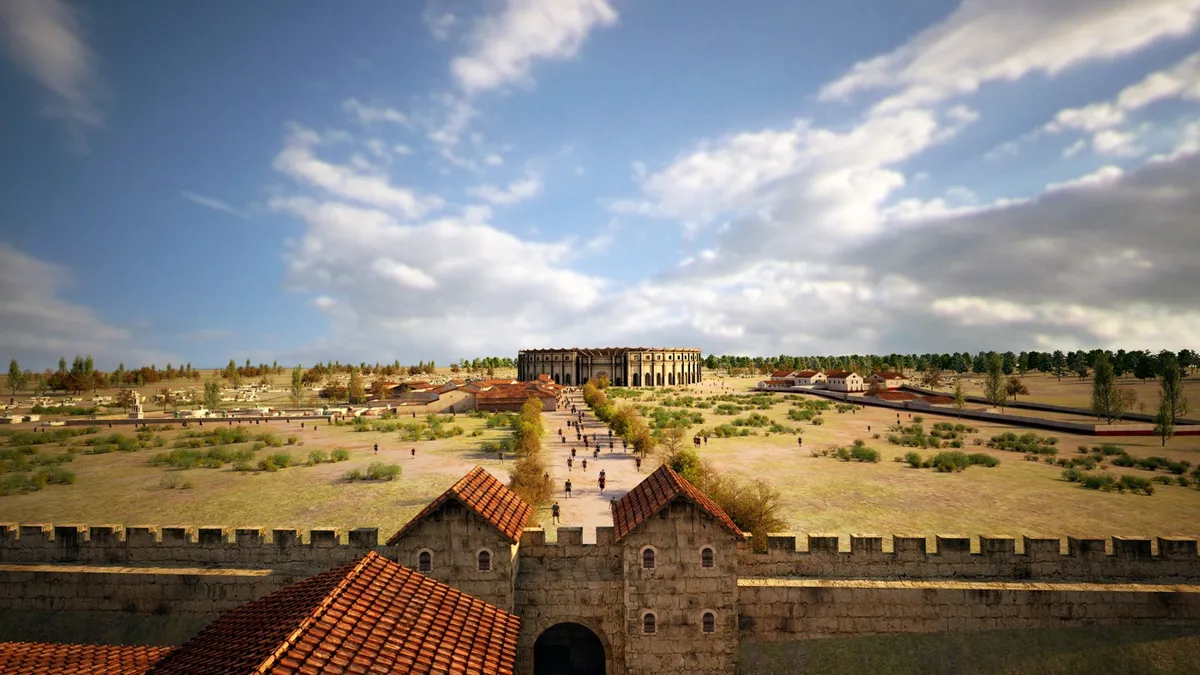
The team, from the Ludwig Boltzmann Institute for Archaeological Prospection and Virtual Archaeology (LBI ArchPro), created digital reconstructions of what the area around the amphitheater would have looked like. [Read the full story here]
Gladiator school and shops

A few years ago, the researchers found a gladiator school, and more recently they identified a wide, shop-lined boulevard.
Underground city

Carnuntum fell into decline in the fourth century A.D., and now the city is largely hidden underground. So the archaeologists used non-invasive methods, like ground-penetrating radar, to peer under the surface.
Old amphitheater

The researchers also revealed the layout of a forgotten older wooden amphitheater near the main amphitheater. It had been buried under the walls of the civilian city.
Bread and games

The team identified a huge oven that likely would have been used for baking bread to feed the spectators.
Wine cellar

Underground cellars would have stored the food and wine sold in the area’s taverns.
Shopping

This entertainment district was separate from the rest of the city and clearly led up to the amphitheater. It probably also would have included shops where people could buy souvenirs to remember their day at the arena.

