













In Photos: World's Oldest Ax Blade Found in Australia

Ax fragments
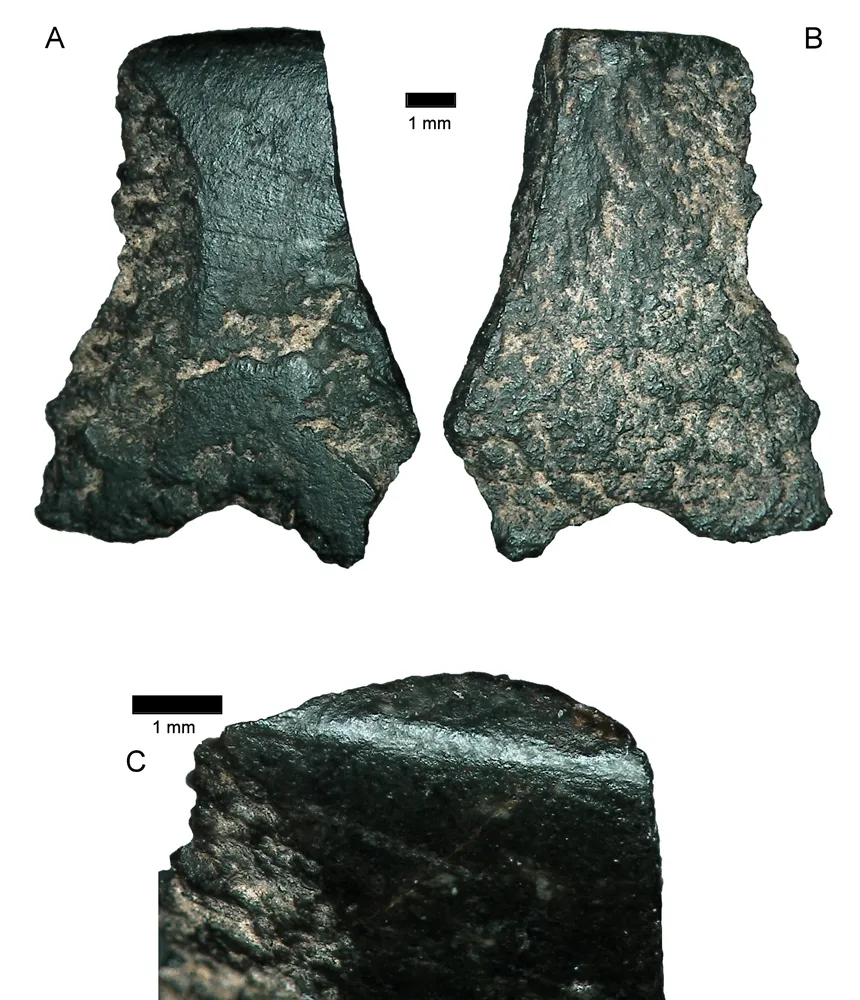
Archaeologists uncovered what could be the world's oldest stone ax blade in an ancient rock shelter in Australia.
Fragments of the ground-edge stone ax blade were found at the Carpenter's Gap archaeological site in northwestern Australia. The tool fragments are estimated to be between 46,000 and 49,000 years old. [Read full story about the ax blade discovery]
Blade detail

An example of a complete ground-edge axe head from Australia.
One of the key features of the newfound ax is that its stone blade has been ground down on both sides to form a beveled edge.
Ancient tools

Examples of full stone hafted (or handled) axes from Australia.
Researchers say these types of axes, used for heavier work, were distinctive to modern humans
Dig site map

A map of northwestern Australia that shows the location of archaeological digs at known early human habitation sites, including Carpenter's Gap.
Learning from the past

Archaeologist Sue O'Connor (right) found the ax fragments during digs in the 1990s at Carpenter's Gap. At left is study co-author Tim Maloney of the Australian National University.
Stone tools

An example of a complete ground-edge ax head from Australia.
Discussing history

Sue O'Connor (right), a professor in the School of Culture, History & Language at the Australian National University, and Tim Maloney (left), a Ph.D. graduate of the Australian National University, with a sample ax head.
Get the world’s most fascinating discoveries delivered straight to your inbox.
Carpenter's Gap

The Carpenter's Gap rock shelter in the Kimberley region of northwestern Australia.
Rock shelter

The entrance to the Carpenter's Gap 1 rock shelter in the Kimberley region of northwestern Australia.
Map of the dig

Above: The Carpenter's Gap rock shelter in the Kimberley region of northwestern Australia.
Below: a map of the archaeological digs at the Carpenter's Gap 1 site.
History buffs

Sue O'Connor (right) and Tim Maloney (left) of Australian National University examine samples of hafted, or handled, stone axes.
